
Scalability can be defined as a company’s ability to expand its demand without reducing product quality and without increasing prices. A result that is sometimes difficult to achieve.
This is because there are various market barriers, with customers who are increasingly demanding and looking to purchase products customized according to their tastes, desires, and restrictions. At the same time, these consumers expect top-tier experiences from the companies they hire.
In this context, focusing on the implementation of technological resources can be a major driver for achieving scalability, as it helps companies optimize their capacity and quality.
Companies connected to Industry 4.0 have an advantage in this regard, as they count on innovation as an ally. Technologies such as Artificial Intelligence (AI) and the Internet of Things (IoT) are increasingly present in these factories.
The importance of scalability
Having well-structured scalability is fundamental to adapting to increased market demands while maintaining — or even improving — the business’s profit margins.
Furthermore, a scalable company consequently has more agile processes, eliminates bottlenecks, and manages to achieve objectives faster because decisions are based on data and market demand.
The more scalable an industry is, the better equipped it will be to innovate. To achieve this, it is important to focus on strategies for improving production processes that form a more robust flow, resource savings, and organizational culture.
Scalability and product personalization
Providing a level of personalization and service to customers comes at a cost, unlike the mass production model. Therefore, industries need to explore new ways to optimize their supply chains to achieve mass customization.
This, without forgetting to create first-class consumer experiences. As an example, we have a home accessories company that is part of Dassault Systèmes’ client portfolio and places personalization at the core of its brand.
Success story: optimizing the production chain

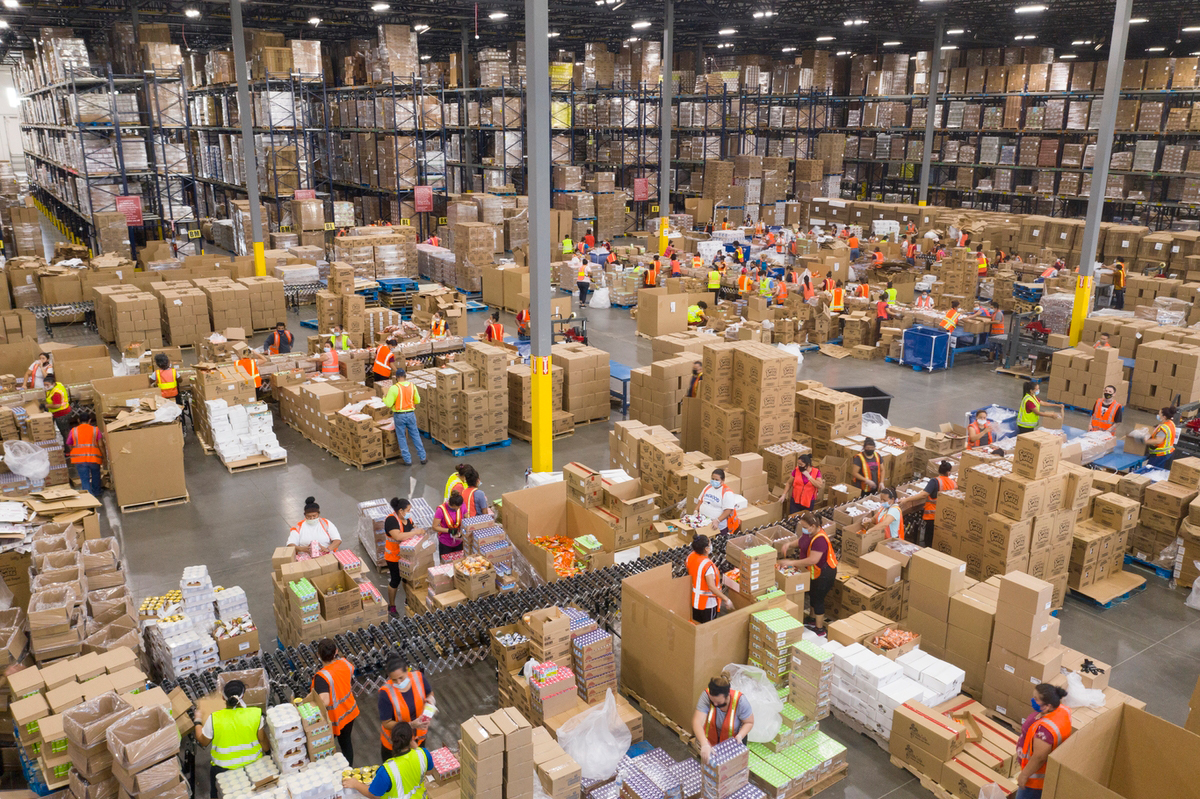
Image source: https://blogs.3ds.com/perspectives/scaling-up-personalization-for-home-and-lifestyle-manufacturers/
This company specialized in designing precision, custom-made, and quality furniture for kitchens and bathrooms. Customers have access to a wide range of customizations in their orders: colors, materials, finishes, dimensions, handles, shelves, drawers, functionalities, etc.
Each component is made to order in the company’s factories, yet still on an industrial scale. To avoid communication failures during the production process, the company needed real-time visibility, as well as collaboration among all departments involved.
Siloed operations can create blind spots in planning, so more effective planning processes were developed, focusing on agility at every stage of the production lifecycle.
The consumer experience also became a priority at all phases so that the right product is delivered on time, ensuring that installation goes smoothly. These changes not only help better meet consumer needs but also allow for increased revenue and profit margins.
The pandemic and the shortage of supplies
Industries had to adapt quickly to changes in supply and demand, especially after seeing how the COVID-19 pandemic disrupted supply chains worldwide.
Manufacturing operations run the risk of being exposed to external events. Alongside this, the demand for raw materials skyrocketed in the past year, causing headaches for suppliers and manufacturers.
Still, customers expect transparency, control, and precise delivery times. To achieve this goal, manufacturers must connect all sectors involved in the production chain, such as design, engineering, transportation, sales, etc.
Production planning in disruptive scenarios
The number of potential scenarios in a production planning tool, in the event of a sudden disruption, can quickly exceed the capabilities of manual planning.
Therefore, decision-making should not be based solely on the production planner’s past experiences, but rather be supported by technology.
Thus, a specialized production planning solution is required, one that has a robust foundation and can calculate all eventualities and apply them to the factory floor’s reality. With the right technology, you have the freedom to explore various options, greatly improving the effectiveness of the planning process.
An APS system like Delmia Ortems is integrated to overcome critical challenges under any market condition. This is because it takes into account all planning horizons (strategic, tactical, and operational) with scheduling algorithms that make your supply chain more agile and flexible.
By adopting systems like this, you can more easily meet ever-changing market needs, as well as address and mitigate problems present in your supply chain.
Want to know more about our manufacturing solutions? Get in touch with our specialist.
*This article was authored by Aloisio Arbegaus, Commercial Director at Teclógica.
Source: https://blogs.3ds.com/perspectives/scaling-up-personalization-for-home-and-lifestyle-manufacturers/

