
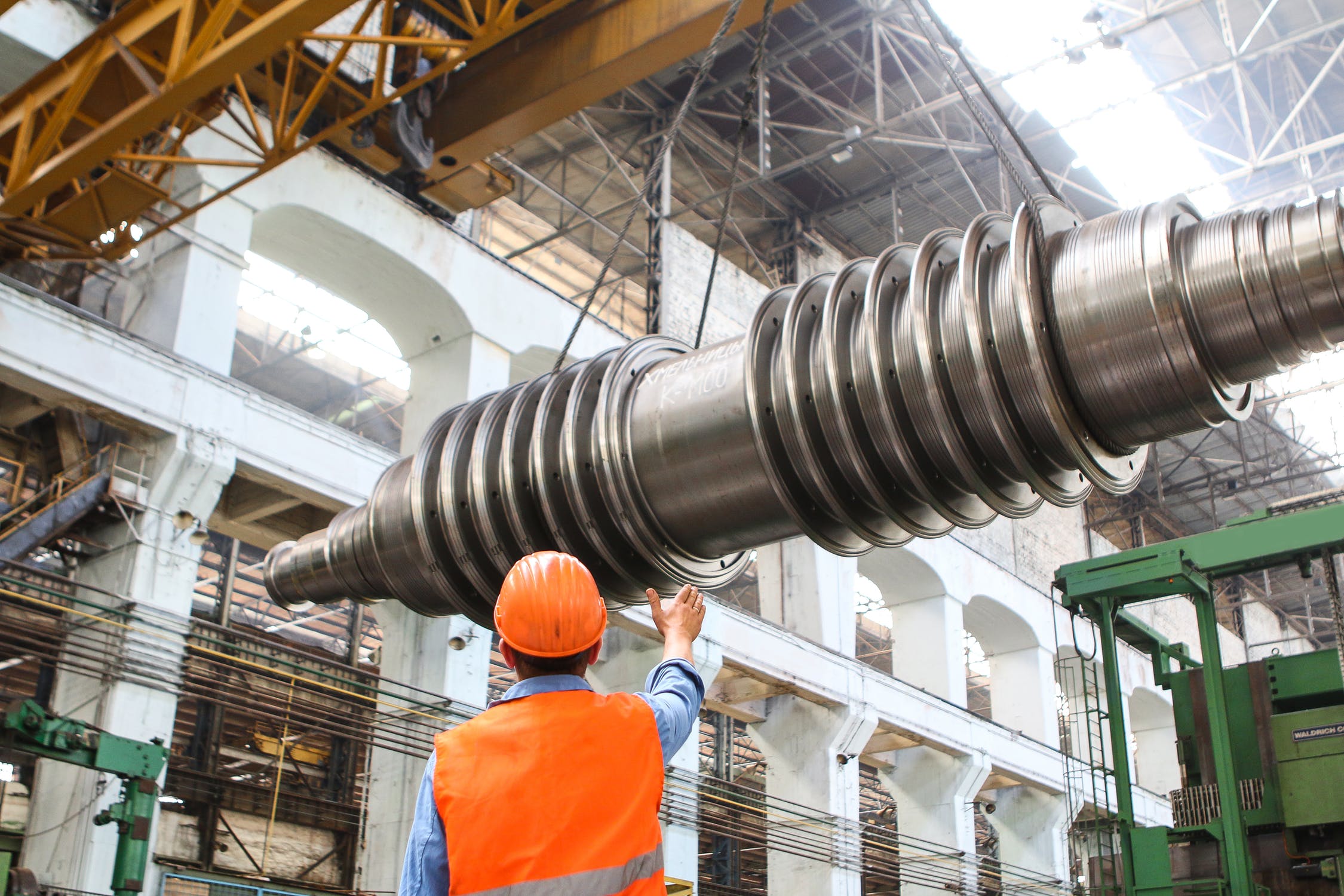
More than a widely discussed term, Industry 4.0 seeks to raise levels of competitiveness and production quality. And within this scenario, impacted by digital transformation, smart factories are on the rise—a term used to define businesses that already use resources linked to Industry 4.0 to optimize the factory floor.
Far beyond simple changes in processes, a smart factory is defined as such when it undergoes profound changes, impacting the working format, resource utilization, and improvements across the entire production chain through technology. In this post, we discuss more about this concept, what it represents in practice, and how your company can adopt measures to also become a smart factory. Check it out.
The changes of the 4th Industrial Revolution
Radical changes driven by the incorporation of new technologies. In short, this is a summary of what the 4th Industrial Revolution is. The use of disruptive technologies and the integration of the entire production chain, with the arrival of artificial intelligence and the Internet of Things, characterizes this new phase, which is responsible for the emergence of smart factories.
With integrated processes and systems, information capture is carried out on the factory floor from the beginning to the end of the production process, guaranteeing companies from different segments the possibility of continuous improvement. The use of systems and robots, for example, is no longer limited to the office or a few production processes, but extends to the entire industrial chain, ensuring the robotization of manual processes, a considerable increase in productivity, the identification and prevention of accidents, and growth in the quality of the final product.
Smart factory in practice
Within the concept of Industry 4.0, where disruptive technologies keep all production processes connected, ensuring end-to-end control and management, the smart factory is a consequence. It is not just about production lines adopting new technologies and processes, but a fully interconnected production chain with integrated systems that guarantee end-to-end flexibility and connectivity.
Among the advantages of this new production model, we can highlight increased productivity, with automated processes and professionals focused on strategic actions rather than just operational ones. Concise data for improving actions, extracted in a timely manner for decision-making, are also differentials. End-to-end automation, with fewer manual processes and reduced errors throughout the production chain, are also essential characteristics in this new scenario.
Innovations for your business
For your company to become a smart factory and compete with global rivals, it is important to pay attention to the main technologies related to Industry 4.0. They are part of a new scenario that is already a reality in developed countries and is beginning to expand in Brazil.
According to the Federal Government, the country ranks 69th in the Global Innovation Index. According to a survey by the Brazilian Agency for Industrial Development (ABDI), the annual estimate of industrial cost reduction in Brazil, resulting from the migration of industry to the 4.0 concept, will be at least R$ 73 billion per year.
Among the technologies related to Industry 4.0, some can be part of a smart factory, for example:
#01 Big Data and Data Analytics
Growing competitiveness has caused the volume of data within companies to grow exponentially. Big Data serves precisely as support for the storage and analysis of this data, which might otherwise become obsolete, but with the help of systems, can be evaluated to help managers make decisions for process improvement. This is where Data Analytics comes in, with software developed especially to support the analysis and results of this data for the industry.
#02 Integrated systems
Solutions that assist in production planning are essential for companies to meet a new consumer profile. It is increasingly common for production batches to grow, featuring more customizable products.
Rapid planning and the integration of this scheduling with other sectors, such as raw material procurement, are essential for the production chain to gain efficiency. An example of such a system is DELMIA Ortems, which can handle a year’s production planning in just 30 minutes, taking into account data stored in the company’s systems, including the ERP, as it can be integrated with these systems. Speed and cost reduction are two advantages of this process.
#03 Cybersecurity
Smart factories with an eye on the future also need to pay attention to data security. This new industrial landscape has made room for the growth of cybercrime, where cybercriminals steal data that can compromise company competitiveness and operations.
In addition to service monitoring, the application of security protocols, new actions within company culture, and audits, it is important to adopt reliable systems. Solutions featuring access control, such as two-factor authentication (password and fingerprint, for example), data encryption, and robust systems developed by trusted brands are all part of the set of best practices for digital security.
#04 Cloud computing
This is another increasingly common practice in Industry 4.0. Cloud storage reduces infrastructure costs without compromising data storage security. Furthermore, it allows access to integrated systems from various points across the industrial facility, as well as sending data collected on the factory floor to the central hub. It also facilitates the use of Internet of Things devices, which connect field equipment to the cloud, collecting real-time data about the factory.
Cloud systems, besides being secure, ensure rapid decision-making since they can be accessed on or off-site, providing greater management flexibility. Leaders will stay up to date with records even during business trips, for example.
All these innovations are making room not only for the transformation of industry, but also for technological development and the emergence of new solutions for controlling and growing industrial production.
Along with the valuation of qualified professionals, who need to develop and must count on company support to enter this new scenario, technology is transforming industry, making it increasingly efficient, productive, and technological.
Did you like the text? Want to make your factory floor more efficient? Get in touch with us to learn more.

