
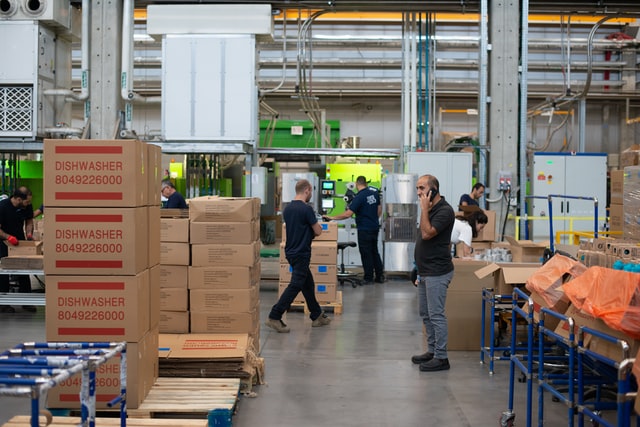
Materials management within a factory is an activity directly linked to inventory control. This is because tracking the shortage or excess of any item can help prevent various production issues.
Properly planning production prevents waste and the unnecessary purchase of raw materials that are not in short supply. Likewise, it prevents any essential item from running out, which could halt production and lead to delivery problems.
Decision-making regarding production can be optimized through efficient materials management. This activity helps forecast replenishments and understand the product lifecycle within your factory. Follow our article and learn a bit more about the importance of materials management in industries.
Importance and benefits of materials management
The context of the pandemic demonstrated the need for this adaptation, as many industries had to remain inactive due to a lack of materials. Of course, this was an extreme situation that required drastic measures. However, industry capacity combined with solutions capable of anticipating actions helps provide more security for operations.
Ensuring production continuity even in unfavorable scenarios is one of the advantages of taking materials management into account in your planning.
To help with this task, there are systems that use the characteristics of each industry, according to segment needs, to optimize production planning and materials management. The greatest benefits this type of ally can bring are:
- Increased productivity;
- Cost reduction;
- Savings of resources and materials;
- Anticipation of scarcity scenarios for order placement;
- Greater delivery efficiency;
- Deadline compliance;
- Increased customer satisfaction;
- Increased sales and profit margin.
Furthermore, with appropriate tools and solutions linked to digital transformation, it is possible to perform production data analysis and anticipate actions. The very management of materials and raw materials in inventory allows for the planned purchasing of fundamental inputs for operations.
An example of this is the production order, when the system makes automated material requisitions. In addition to the task being related to quantity, it also facilitates the classification and organization of materials and helps plan subsequent purchases.
Such systems help estimate and optimize the three main levels: Minimum, Maximum, and Target. Thus, your factory manages to prepare both for large order volumes and for slower periods.
Manual materials management
It is still common today to find an entire industry’s materials management being done through paper and pen. This type of situation causes rework and is neither efficient nor productive.
Besides being time-consuming, this activity is prone to errors and failures. This is because not only can employees make mistaken notes, but clipboards can also be misplaced and lost.
Technological innovations help reduce communication failures in production processes. This occurs because these steps are driven by automation solutions. In this sense, professionals receive more accurate information and analysis. To perform more efficient management, it is also important to pay attention to a few details:
- Stay alert to sanitary and safety standards in your sector;
- Plan purchases according to demand to avoid materials sitting idle for long periods;
- Create an inventory routine for materials in stock for a better overview;
- Hire reliable suppliers to avoid risks regarding material deliveries;
- Organize the warehouse so that quantity checks and employee access are easier;
- Monitor the production line, as well as the entry and exit of materials, to identify bottlenecks.
How manufacturing solutions work
Integrated systems, such as APS (Advanced Planning and Scheduling), help organize the production routine. These tools can anticipate events that affect productivity and delivery deadlines.
In addition, they help forecast machinery maintenance needs and prevent production stoppages for this reason.
The APS collects operation data and stores it in a way that makes it possible to interpret information and measure results for better decision-making. These tools assist the production plan by performing advanced and detailed planning.
The technology in industrial activity can optimize inventories and manage different production levels. Thus, inventory levels for each production speed can be controlled through integration with other management systems already present in your factory. This is possible due to the information collected in the APS.
Therefore, the system can calculate inventory, simulate production lines, and thus assist in industry materials management. Production Planning and Control (PPC) is carried out precisely because of the automation of this process.
Often, these solutions have intelligent monitoring systems that allow for increased productivity, making the most of available resources. Furthermore, these tools can have visibility across the entire production chain and issue notifications when there are constraints, delays, and other unforeseen events.
Excess or shortage of primary industrial products are also signaled, as they can affect the company’s production and finances.
Shop floor management leads to optimization and high machine performance. With this, digitalization not only propels the industry into the era of digital transformation but also optimizes and improves deliveries.
Want to know the main technological trends aimed at factory management? Follow other content on our blog!

