
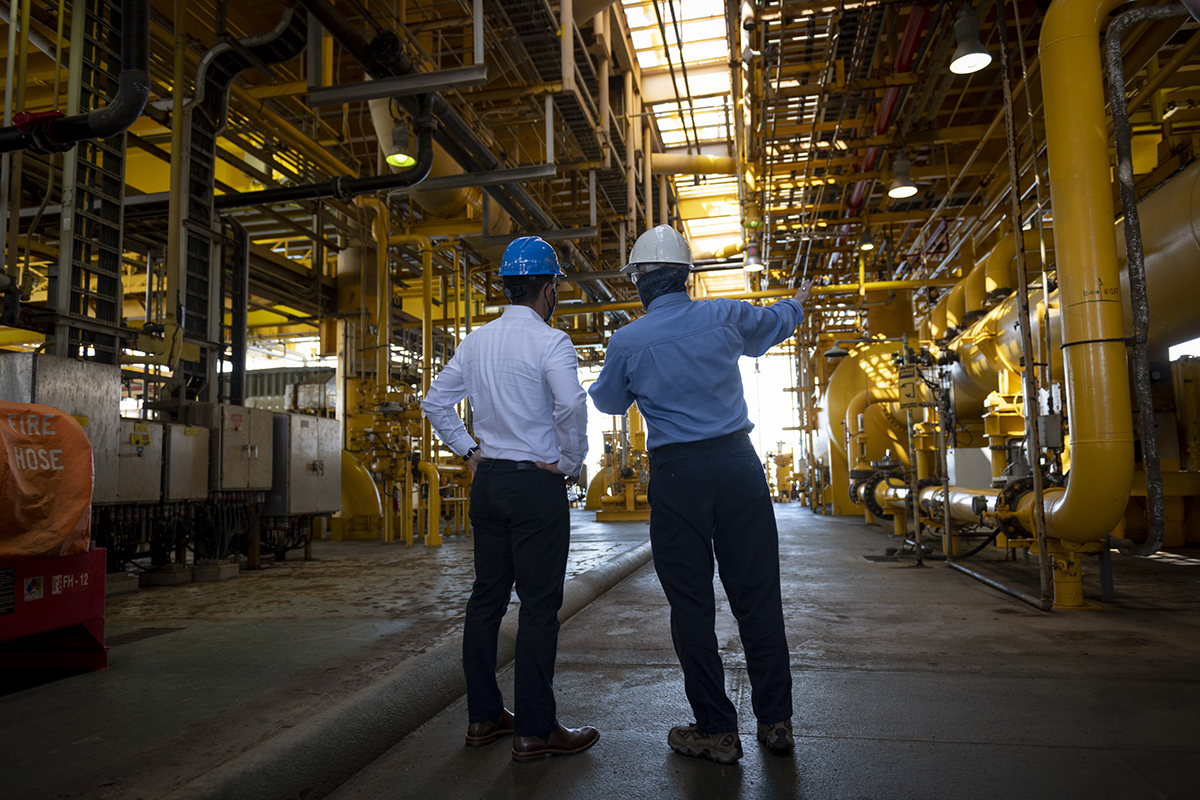
Have you heard of Advanced Manufacturing or Industry 4.0? These terms represent a fundamental transformation in the industrial sector, driven by technological advancements such as Big Data and Artificial Intelligence (AI). Aiming to significantly expand the productive capacity of industries, this solution guarantees an operational scenario with enhanced prospects for growth and profitability.
In this article, we want to clearly discuss what advanced manufacturing is, its applications, importance, challenges, and the investments needed to stay competitive in this new industrial era.
What is Advanced Manufacturing?
Advanced Manufacturing refers to the application of innovative technologies to improve efficiency, productivity, and quality in manufacturing processes. Also called Industry 4.0, it incorporates a series of technological advancements, including simulations, cloud systems, user-centered design (UX design), computational advancements, physical modeling, and production technologies. Its main characteristics are:
- Simulations: allow the modeling and analysis of production processes before physical implementation.
- Cloud Systems: facilitate data storage and processing, as well as integrating different systems and processes.
- UX Design: focus on user experience, facilitating interaction with systems and equipment.
- Computational Advancements: high-performance computing for advanced simulations and modeling.
- Production Technology: includes advanced robotics, automation, and additive manufacturing (3D printing).
Thus, the great ambition of Industry 4.0 is to have machines and equipment that communicate and collaborate with each other, resulting in more efficient and productive operations.
The importance of Advanced Manufacturing in industry
Advanced manufacturing is transforming the way industries operate, in such a way that they are capable of integrating technologies that enable more efficient, intelligent, and effective production. During the COVID-19 pandemic, research indicates that companies that adopted at least three new integrated technologies saw an increase or maintenance in their profits compared to the pre-pandemic period, highlighting the importance of adopting these technologies.
Therefore, we conclude that the application of technology in industry provides a series of benefits, such as:
- Operational Efficiency: Systems integration and process optimization.
- Profitability: Improvement in manufacturing processes, leading to cost reduction and increased production.
- Resilience: Ability to adapt to rapid market changes or crises, such as the COVID-19 pandemic.
Main technology groups in Advanced Manufacturing
Technologies in advanced manufacturing can be divided into three main categories:
1. Efficient Production
This category involves the use of design, simulation, physical and computational modeling to optimize manufacturing processes. The focus is primarily on simultaneous engineering and advanced production techniques, such as additive manufacturing (3D printing) and precision machining.
2. Intelligent Production
In this case, it involves the use of information and communication technologies (ICT) to create intelligent logistics systems and oriented production. Advanced manufacturing in this area seeks to optimize the use of production facilities through efficient monitoring and maintenance strategies.
3. Efficient Organization
Refers to the efficient coordination and exploitation of manufacturing resources, including physical and knowledge assets. This group brings concepts like virtual factories and innovative companies, promoting a more agile organization capable of responding rapidly to market demands.
Challenges of Advanced Manufacturing
Although adopting advanced manufacturing brings numerous benefits, it also presents significant challenges, such as:
- Systems Integration: connecting different technologies and systems can be complex.
- Cybersecurity: increases vulnerability to cyber attacks due to interconnectivity.
- Process Adaptation: requires the redesign of traditional processes and specialized training.
In Brazil, 74% of industries have already adopted at least one 4.0 technology, but some sectors still lag behind in this investment. The need for modernization and personnel training is an ongoing challenge.
Investments needed for Advanced Manufacturing
Thus, we understand that competing in the Industry 4.0 market requires investments in technologies and training. We have listed the main types of investment below:
Equipment and Software
Investing in advanced technological equipment and software that enable process integration and automation is essential. In this sense, some examples may include industrial robots, manufacturing execution systems (MES) and IoT platforms.
Professional Training
The training of new professionals and the continuous training of the existing workforce are crucial. Emerging professions include, for example, digital operators, industrial digitization specialists, electronic unit programmers, and robotic process operators.
Management Systems in Advanced Manufacturing
Manufacturing Execution Systems (MES) are critical tools in the implementation of advanced manufacturing. They monitor, track, and optimize manufacturing operations in real-time, reducing error margins and improving communication and decision-making.
Conclusion
In summary, advanced manufacturing is essential for competitiveness in the Industry 4.0 era. Investing in innovative technologies, training the workforce, and adopting efficient management systems are fundamental steps to stay ahead in the market. If your company has not yet embarked on this journey, the time to act is now.
To learn more about advanced manufacturing and how to implement these technologies in your company, do not hesitate to explore our additional materials on the blog or contact us.
