
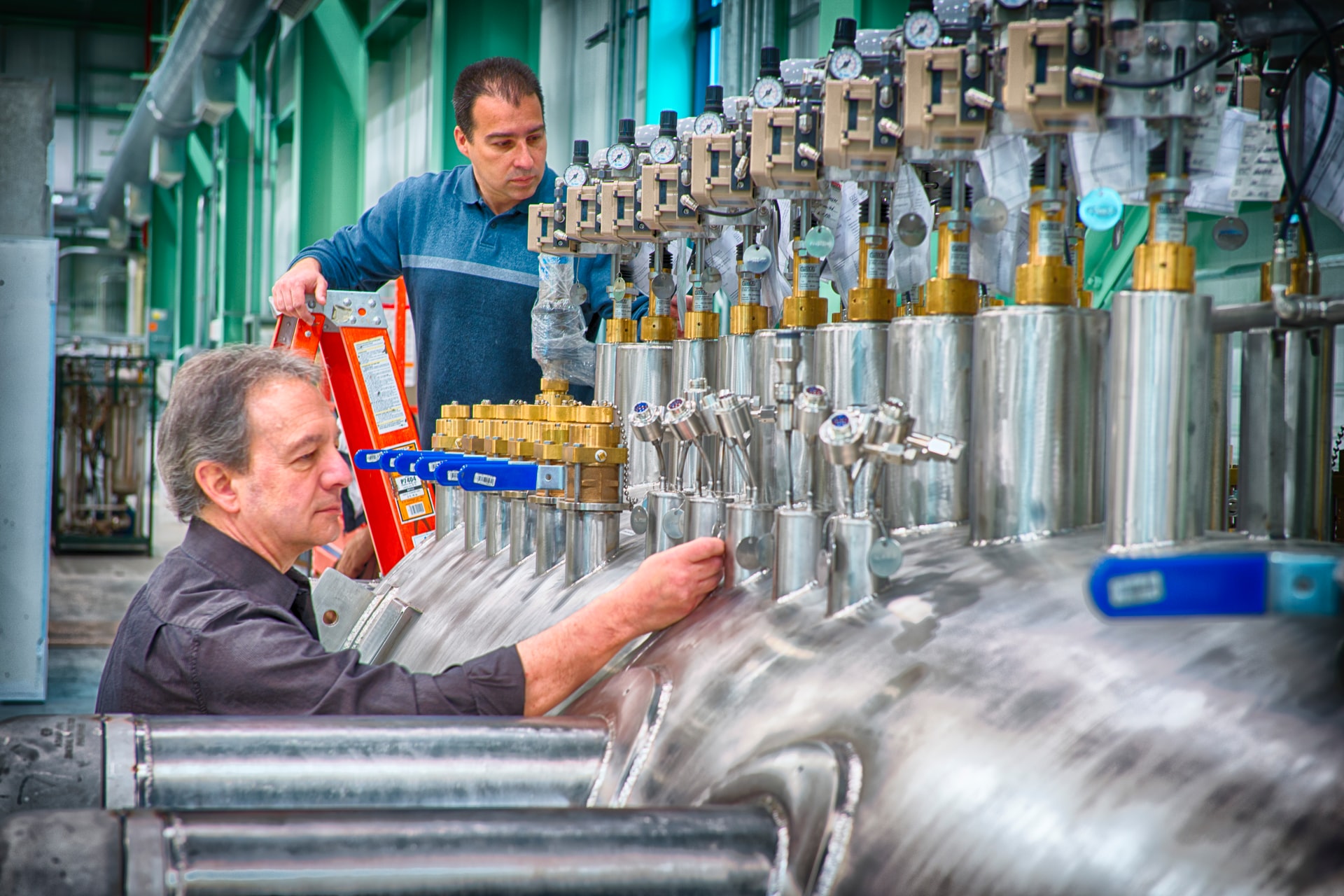
The gradual resumption of activities worldwide, following restrictions brought on by the pandemic, was responsible for the increase in industrial production in recent months. In June, Brazilian factories increased production by 8.9% compared to the previous month, according to IBGE. And one of the factors that will make companies stand out in this new economic resumption scenario is the so-called digital factory.
With the use of technological resources, industrial production becomes much more proactive. With cutting-edge solutions, industries gain in efficiency and cost reduction. In the digital factory, software that allows the visualization and simulation of processes enables the development of more comprehensive and competitive manufacturing processes in the market.
Learn in this post how the digital factory implementation process takes place. Also, check out the benefits of this concept for your business!
Digital factory: what it is and what changes in your production?
Have you ever imagined being able to predict your industry’s production routine? And even before including new deliveries in planning, knowing how to improve this process? Basically, this is one of the great benefits of the digital factory or digital manufacturing.
A digital factory is understood as the use of integrated technology solutions in the production process. These solutions provide management with a holistic view of production. Examples include mobile data collection devices across production – the Internet of Things – 3D visualization tools, and production planning software. They collaborate to minimize errors and reduce costs. There are also APS systems (Advanced Planning and Scheduling) linked to advanced and detailed production planning.
It is these solutions that, by collecting and storing data, help predict new factory demands. Based on a process of intelligence and automation, managers have reliable information at hand to reorganize workflows and ensure fast, quality deliveries.
What does automation bring to the industry?
Considered one of the global market trends, industrial automation is beginning to gain momentum. It is through the adoption of technological management, forecasting, analysis, and continuous improvement action solutions that companies are standing out in the market.
Furthermore, technology can also ensure the efficiency of mass customization production. Even when developing products aligned with new consumption trends, it is possible to achieve scale and agility on the shop floor.
With the digital factory, the gains are countless. Starting with reliable data on production, which can be applied to identify improvements. It is this information that also facilitates delivery management and the scheduling of new production. Decision-making becomes data-driven rather than based solely on intuition.
Another essential issue is that automation is at the core of the digital factory. Fewer manual processes and more predictive routines are intrinsically linked to greater speed and efficiency in the production process.
Digital factory in practice
A study by Centro Universitário Católica SC showed that participants who already have automation processes in place highlighted that:
- 55% experienced an increase in productivity;
- 45% reported a reduction in equipment downtime and consequently in operating costs;
- 41% highlighted an increase in company brand visibility.
Furthermore, 78% of participants agreed that the main focus is process control and monitoring.
In other words: the digital factory concept has already proven its results. Globally recognized solutions integrate market opportunities for those who want to adopt improvements through automation.
An example of software directly linked to digital manufacturing is Delmia Ortems. It is a production planning solution that allows the organization of the factory’s annual production routine in just 30 minutes.
Furthermore, this type of solution allows the capture of events that require attention on the production line. This is the case, for example, with failures in a specific machine, which is quickly routed for maintenance. With this practice and the collected data, similar situations can be anticipated in the future. Preventive maintenance will lead to cost reduction and adjustments to production quality.
Another decisive factor for the digital factory to be considered the future is that integrated solutions provide fundamental data for decision-making. These solutions, such as Delmia Ortems, not only process or collect information, but turn it into differentiators that support the process of reducing losses and costs and continuously improving production.
In short, automation makes the production process increasingly efficient and competitive. In this scenario, the winners are those who already invest in automation solutions and are aware that the digital factory is the future of global manufacturing.
Want to know more about trends, opportunities, and gains in Industry 4.0? Keep following our posts here.
Signed by:

Aloisio Arbegaus — Sales Director at Teclógica

