
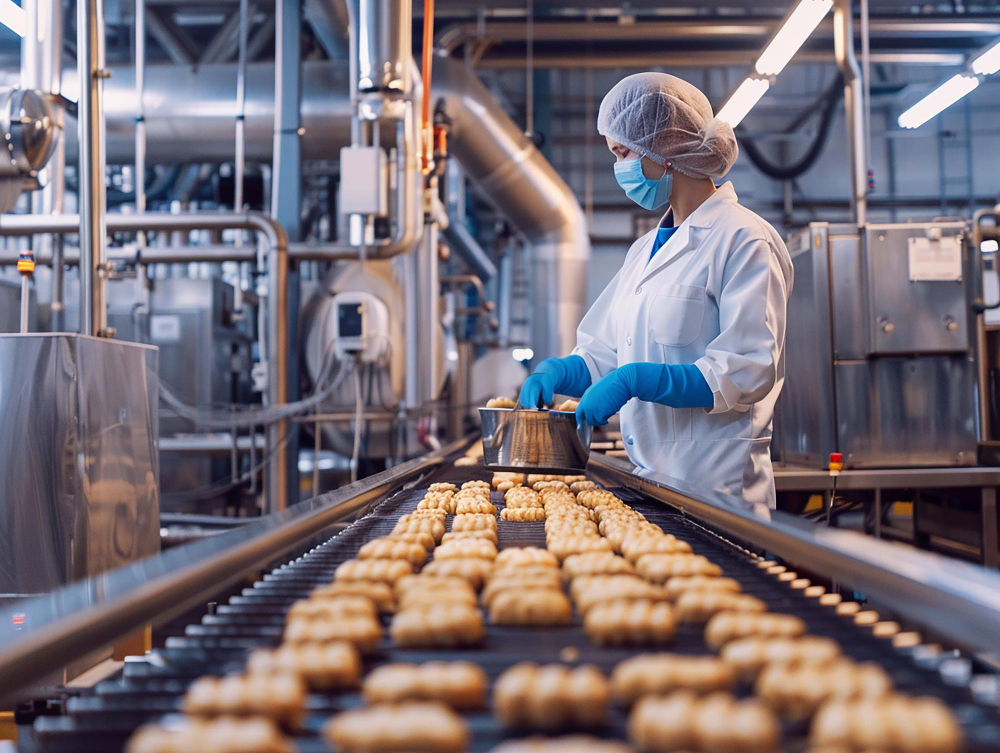
In today’s competitive market, the food industry faces significant challenges to maintain quality, efficiency, and compliance with sanitary regulations, which are not few.
Now, imagine a production line where everything is controlled manually: spreadsheets multiply, rework piles up, and any deviation can turn into a logistical and financial nightmare, without ignoring production line stoppages for any reason.
Without an effective system, profit margins can be gradually impacted. And this is where a Manufacturing Execution System, or MES (Manufacturing Execution System) can easily prove its value.
Companies that still rely on manual processes to manage production encounter a cauldron of problems. In addition to constant rework, which increases costs and decreases profitability, there is the risk of failing to meet traceability and food compliance requirements, for example.
With so many regulations in place, from ANVISA to international food safety standards, in compliance with the Codex Alimentarius – resulting from a joint program between the Food and Agriculture Organization of the United Nations and the World Health Organization – relying on memory or paper notes is almost like playing Russian roulette with your brand’s reputation.
Benefits for the food industry
And it is in this scenario that MES can act and make a difference for the food industry, with the role of operationalizing various stages of management and process control on the production line, besides providing accurate data for controllers. However, it is worth noting that MES is not a one-size-fits-all solution, as it can be customized to meet the most specific and distinct needs of each segment of the food industry, whether for a biscuit factory or a frozen food producer.
Among the available features, we can have:
- Batch management: To ensure complete traceability of each ingredient used, from factory entry to the final product on the shelves.
- Real-time quality control: Allows monitoring and adjusting production parameters automatically, ensuring that products meet quality and safety standards.
- Filling optimization: Reduces losses and waste during the filling process, ensuring greater precision and less rework.
- Regulatory compliance: Allows automation and data collection for regulatory reports, minimizing human errors and ensuring that the industry is always up to date with current standards.
Implementing an MES solution represents much more than just savings. Adopting this technology brings countless advantages that go beyond simple process automation. First, we have profitability, because with less waste and more efficiency, production costs decrease and the profit margin increases.
Furthermore, MES contributes to a significant reduction in rework and unscheduled downtime, which means more production time and fewer headaches.
Another point is the improvement in final product quality. With real-time monitoring and automatic adjustments, it is possible to ensure that each batch produced is consistent, meeting the highest standards of quality and safety.
How does this technology work within the Food Industry?
So, how does MES work its magic? Think of it as the conductor of an orchestra, ensuring that each instrument (or process) is perfectly synchronized.
An MES tailored to the needs of the food industry not only allows broad control of all production stages, but also maintains high levels of compliance with sanitary surveillance standards, from the reception of raw materials to the dispatch of final products.
Let’s look now, in a little more detail, at some elements resulting from this solution.
Integration with ERP Systems and Industrial Automation
MES not only optimizes the shop floor, but also seamlessly integrates with existing ERP systems. This allows fluid coordination between inventory management, production orders, and execution, reducing response time and increasing operational efficiency. Thus, it is possible to automatically adjust production according to demand, avoiding excess inventory or shortages that could compromise product delivery.
Real-time monitoring and control
Another crucial point is the real-time monitoring that MES provides. With integrated IoT sensors, the system captures accurate data from production lines, immediately detecting and correcting any quality or performance deviation. This means fewer losses and more production consistency, ensuring that every batch delivered to the market maintains the required standards of excellence.
Predictive analysis and preventive maintenance capability
Furthermore, MES offers predictive analysis tools that use historical data to forecast potential equipment failures before they occur. This feature not only extends the lifespan of machinery, but also prevents unexpected stoppages, ensuring continuous and efficient production.
Batch traceability and regulatory compliance
In terms of traceability, MES shines. It allows complete tracking of batches, from the entry of raw materials to the final product. This is vital to meet rigorous regulations such as BRCGS and FSSC 22000. Moreover, the system facilitates the generation of detailed reports for audits, minimizing errors and costs associated with compliance.
Cost reduction with energy and resource management
Efficient management of energy and other resources is also a significant benefit. MES optimizes consumption in real time, adjusting processes to minimize waste and reduce operating costs. This not only improves profitability, but also reinforces the company’s commitment to sustainability.
Flexibility to adapt to market demands
In a dynamic market, flexibility is essential. MES allows rapid adaptation to changes in demand, adjusting production plans as needed. This ensures that the industry is always ready to meet consumer needs, maintaining competitiveness and relevance in the sector.
Customized dashboards and KPI analysis
MES also offers customized dashboards that display KPIs in real time. This provides managers with a clear and up-to-date view of operational performance, allowing for more informed and agile decisions, improving response to market fluctuations and internal needs.
Specialized technical support and scalability
Finally, it is worth highlighting the specialized technical support offered by Teclógica, which ensures that the MES solution is always aligned with the company’s needs. In addition, the system’s scalability allows it to grow along with the business, incorporating new modules and functionalities as needed.
Conclusion
Whether in the production of yogurts, pasta, or juices, even biscuits or the production of the most distinct canned foods, MES proves to be a true ally in the pursuit of excellence. Without it, the food industry runs the risk of falling behind in a market that does not forgive flaws. So, the next time you are enjoying your favorite biscuit, or that favorite yogurt, remember: behind that product, there may be an MES solution ensuring that everything is exactly as it should be. After all, in the food industry, the recipe for success includes cutting-edge technology and a good touch of innovation.
Did you like this content? Take the opportunity to get to know our complete MES solution for industries.

