
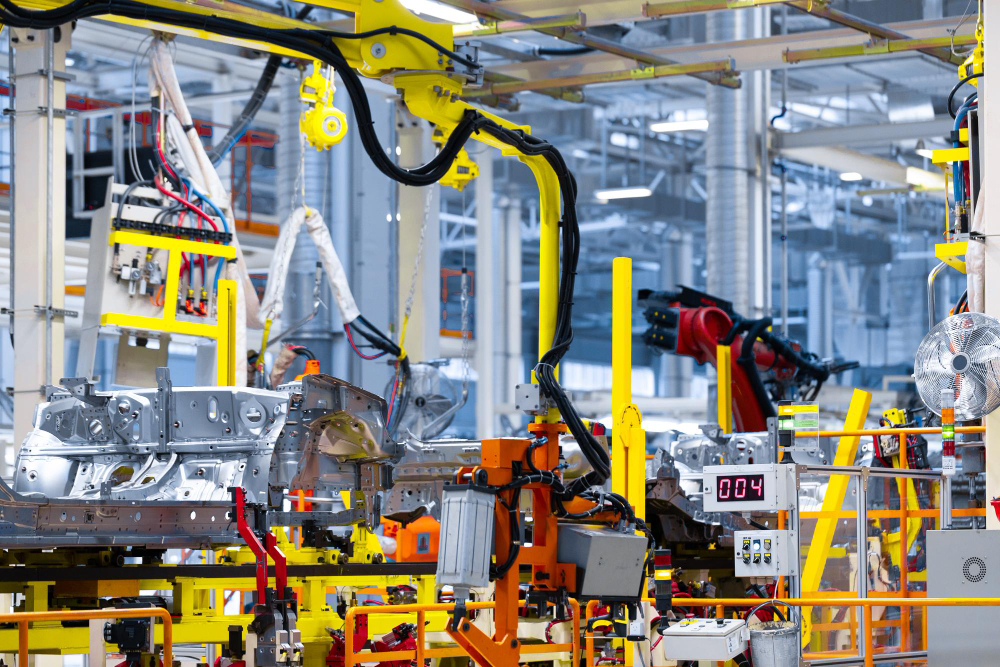
Adopting an Industry 4.0 technology such as a Manufacturing Execution System (MES) integrated with the Internet of Things (IoT) and automated processes is a task consisting of several stages and can be a challenge for those starting this process.
According to data from the “Industry 4.0 Monitor” study, in 2022 the Brazilian Industry 4.0 market reached a value of US$ 1.77 billion. It is expected that by 2028 this value will increase to US$ 5.62 billion. In this growth scenario, the opportunity for the segment and the need for more companies to adapt to the new reality are clearly visible.
Understand the challenges
Replacing manual controls and spreadsheets with advanced technology can improve efficiency and productivity, but the transition is not trivial. This article lists the main challenges that your company may face:
1. Technical challenges
Integration with systems, such as compatibility with MES and IoT solutions, may require the development of custom interfaces, as well as a complex architecture that must be carefully planned. Legacy systems may be incompatible with new MES and IoT solutions, requiring the development of custom interfaces.
In this scenario, infrastructure and connection network security must also be analyzed to support connected IoT devices, ensuring the necessary security against cyber threats.
Another important point is to monitor whether the data collected via devices is accurate and reliable. The amount of data generated is massive; in this case, ensuring robust storage solutions and processing capacity are paramount to the process.
2. Organizational challenges
Organizational challenges go beyond implementing technology within the industry. Since employees accustomed to traditional methods may resist new technologies, creating cultural barriers to adoption.
This transition must be well planned; therefore, investing in training and capacity building to help employees adapt to the new reality is important, just as ensuring effective communication about the benefits and impacts of the changes is crucial for success.
3. Financial challenges
Applying Industry 4.0 technology in factories may require a significant investment in hardware, software, and infrastructure. In addition, maintenance costs, system updates, and the need for continuous training of the teams involved can be substantial.
Therefore, it is important to evaluate that many benefits will be seen in the long term, and that the investment which initially may not seem to have ROI value tends to be viewed favorably over the years.
4. Operational challenges
Implementing Industry 4.0 technology demands greater effort and control over the company’s operational performance, especially at the beginning of the project, until all components are integrated and adjusted. Temporary interruptions, data standardization, and quality issues may also occur.
The interpretation of data after implementation can generate doubts among the team, considering that previous collections were manual and inconsistent. In this case, adjustments to the process, collection, and analysis may be necessary.
5. Compliance challenges
The introduction of new technologies may bring additional legal and regulatory compliance requirements. Thus, automated systems must be prepared for audits and reports that meet industry regulations.
Ensuring the protection and privacy of data collected by IoT devices, especially in compliance with data protection laws such as the LGPD or GDPR, is essential for the regulated use of the solution.
6. Human challenges
One of the main factors for implementation success is relying on professionals who have the necessary skills to operate and manage MES and IoT systems.
However, there may be a skills gap among existing employees to operate and maintain the new technologies, making it necessary to invest in training and capacity building.
How to overcome the barriers?
Now that you know the main challenges of industrial technology implementation, it is important to know that there are strategies to mitigate errors, overcome barriers, and ensure the best return that an MES solution can offer. We present some strategies below:
- Prior assessment: Conduct a complete analysis of the current infrastructure and plan the integration of new systems.
- Proof of Concept (PoC): Implement PoCs to evaluate the feasibility and benefits of MES and IoT before large-scale adoption.
- Financial planning: Develop a financial plan that includes cost estimates and ROI timelines.
- Training: Invest in continuous training and skills development for employees.
- Project management: Adopt a structured project management approach for implementation, with clear schedules, goals, and KPIs.
The adoption of MES + IoT + automated processes can transform an industry, providing significant gains in efficiency, accuracy, and responsiveness. However, abandoning manual controls and overcoming challenges is essential for a successful transition.
Why leave manual control behind?
Transforming the industry with high technology is a laborious challenge. However, continuing to support the industrial journey with manual controls, notes, and spreadsheets can turn into major problems, such as the loss of a standardized history of operations, reduced capacity for analysis and real-time data collection, rework, and slower processes.
Digital transformation brings several advantages for companies, some of which include:
- Delivery quality: errors are mitigated through smart machines, ensuring customer satisfaction;
- Continuous improvement: it is possible to compare results, test new processes, and redesign old ones, all based on data collection.
- Efficiency and operation optimization: with industrial technology, everything is in the cloud and accessible for real-time data collection.
In addition to these listed benefits, the use of an MES solution and IoT systems gives industries a greater ability to adapt to market changes, offering a clear view of Business Intelligence through data that supports decision making.
How to adopt Industrial Technology: the role of providers
Certainly, to start your industrial journey, it is important to ensure the right guidance and rely on a certified solution provider to support you along this path. Let’s explore how solution providers, such as Teclógica, can help your company navigate the Industry 4.0 revolution.
Learn how Teclógica can be your guide to Industry 4.0:
1. Expertise and technical knowledge
With over 30 years of experience in this market, Teclógica is a specialist in the implementation of MES and IoT solutions, delivering an initial diagnosis and future assessment to the client. With deep technical knowledge, business needs are evaluated and custom solutions are created to make a difference in the company’s daily operations.
- Specialized consulting: through a team that evaluates the company’s needs and recommends the best MES and IoT solution for your specific context.
- Development and integration: Integrates new systems with existing ones, avoiding the classic compatibility problems everyone fears.
2. Cost reduction and ROI acceleration
One of the biggest fears when adopting new technologies is cost. However, Teclógica offers models tailored to the reality and size of your company.
- Flexible business models: Reduce initial costs and adjust as needed.
- Clear contracts: Know exactly what you are paying for, and what will be done, step by step, with your industry.
3. Continuous support and training
Adopting new technologies is just the beginning. The continuous support and training provided by Teclógica are like follow-up sessions with your doctor, ensuring your team knows how to use the new tools effectively.
- Team training: Training programs to facilitate the transition and maximize return.
- Updates and maintenance: Ensure you are always ahead, with the latest improvements and security patches.
4. Project management and implementation planning
Transforming your company is like a complex operation. Teclógica uses structured methodologies to plan and execute each stage of implementation, minimizing risks and ensuring compliance.
- Project management: Detailed planning and structured execution, with clear schedules.
- Implementation phases: Gradual adoption of new technologies, adapting little by little.
5. Compliance and security
Teclógica ensures that your solutions comply with industry regulations and standards, keeping information security robust and up to date.
- Legal compliance: Helps meet specific standards and audit requirements.
- Information security: Protects against cyber threats with integrated measures and continuous monitoring.
6. Continuous innovation and competitiveness
With access to the latest technologies, Teclógica keeps your company competitive, rapidly adapting to market changes and technological advancements.
- Access to innovation: Implements innovations that keep your company at the forefront.
- Adaptability: Facilitates adaptation to new demands and technological advancements.
Choosing a good solution provider to support the transition to Industry 4.0 industrial technology offers companies a chance to grow quickly and efficiently, without the risks that could compromise operations.
Ready to transform your industry with us? Shall we talk?
