
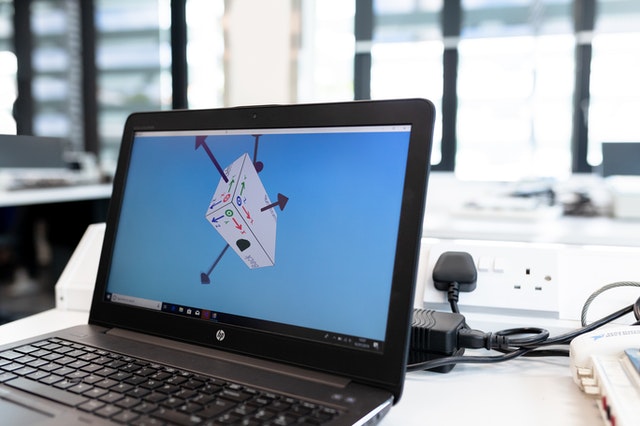
One of the hottest topics in the industrial sector is digital twins. This technology is growing every day and becoming indispensable; according to a 2019 Gartner research, digital twins were already listed in the top 10 trends.
Gartner also predicts that by 2024 millions of objects and processes will be simulated using digital twins. This advanced manufacturing innovation is capable of simulating behaviors and, consequently, optimizing manufacturing processes, bringing several benefits.
To better understand what digital twins are and what the advantages of using them in the industry are, keep reading the article!
What are digital twins?
Digital twins are basically a digital reproduction of a product, structure, or process. They mimic the behaviors of the real item and interpret them in an online environment
Thus, it is possible to perform tests with much greater precision, simulating in various ways to understand which one will bring the best result. Otherwise, when simulations are not performed, the range of possibilities is much smaller and results in more rework and raw material waste.
A technology that goes beyond Artificial Intelligence, the digital twin uses data from different systems to mimic the behaviors of the physical twin facing various factors. Due to this systems integration, the simulation is highly accurate.
In addition, this technology also:
- Integrates employees and processes and assigns activities;
- Predicts the time needed to fulfill a demand;
- Updates information in real time, adapting the assembly line;
- Analyzes data, continuously promoting improvements.
How do digital twins work?
They can be divided into a few groups. See how each one works:
Product Twins
In the current scenario we live in, where new products emerge every day and previous models quickly become disposable, new challenges arise for industries: producing quickly, with a lower percentage of errors and saving money.
The product digital twin serves to test a specific product, structure, or part that has not yet been produced, simulating the characteristics it will be exposed to.
This way, it is possible to predict potential design problems and correct them still in the simulation phase, avoiding countless wastes.
Process Twins
This type of digital twin is used to simulate different manufacturing processes, facilitating decision-making and visualizing which process will be safer.
In processes that use different equipment, the production flow needs to be well integrated to work correctly so that one step complements the other. It is possible to create, for example, the digital twin of the entire shop floor and thus have a macro view of the environment.
This helps to understand the best industrial layout, so that employees can circulate freely and access necessary locations easily, preventing workplace accidents and mobility difficulties.
Equipment or Optimization Twins
Equipment twins, also called optimization twins, simulate existing equipment and thereby calculate how the original will react to certain variables or seasonalities that may occur.
To achieve this, sensors are used on the physical object, capturing information and feeding the digital twin in real time. Then, it analyzes how various external factors can impact production, aiming at the continuous improvement of processes.
This anticipates problems such as equipment overload, for example, allowing power adjustments or preventive maintenance to be performed. Consequently, resolving a problem in advance prevents major expenses.

What are the benefits of this technology for the industry?
After understanding how digital twins work, check out 4 benefits that using digital twins brings to the industry:
1. Increases process efficiency
Using digital twins, processes become smarter because they are based on data analysis. Everything is simulated digitally, calculating short, medium, and long-term impacts, which helps the factory achieve greater scalability in the face of change.
In addition, equipment performance evaluations allow the factory to work with a better productive capacity and fault identification becomes much faster.
2. Cost reduction
With more efficient processes, there is a reduction of time in the production chain. Employees work more agilely and organized, resulting in finished products more quickly.
According to data, digital twins result in a 15% improvement in the time spent developing a product and a 20% reduction in NPI (New Product Introduction) costs.
Since tests are performed before production, there is also a reduction in waste, downtime, and rework, which positively impacts the decrease in company costs.
3. Logistics improvement
Using simulations, it is also possible to improve production logistics and avoid disruptions such as, for example, the impact of parts during the production process or disconnected flows.
To optimize this, process twins take into account the production path, speed, quantity, and, of course, calculate the shortest possible time.
4. Higher quality in the production process
Reduction of errors, identification of flaws, and early correction—all these factors mentioned in this article directly impact the quality of manufactured products.
Furthermore, the systems integration offered by digital twins makes the shop floor more connected and without barriers between departments. This facilitates shop floor communication and minimizes the chances of error.
Digital twins are a trend that keeps growing, but besides them, there are several innovations that help optimize manufacturing processes. To stay on top of all of them, download our ebook: Trends for the industry: how to stand out in the market?

