
+55 (47) 3036-7800

contato@teclogica.com

CONTACT US
Teclógica
  • Home
  • Solutions
    • MANUFACTURING PPI – WEG
    • MANUFACTURING DASSAULT
  • Services
  • About Us
    • ABOUT TECLÓGICA
    • CAREERS
    • GOVERNANCE
  • Resources
    • Blog
    • Free Resources
  • CONTACT
  • English
    • Portuguese (Brazil)
    • Spanish
Home › Blog › Gestão e Serviços de TI › Understand how to optimize your distribution logistics with IT
Gestão e Serviços de TI

Understand how to optimize your distribution logistics with IT

Paying attention to distribution logistics, adapting equipment, and promoting a change in organizational culture are essential factors for companies to gain competitive advantages amidst all the advancement of digital transformation. Customers are more demanding: they expect personalized shopping experiences or services, punctual deliveries, and socio-environmental responsibility from organizations. […]
By Teclógica · 04/01/2018
Understand how to optimize your distribution logistics with IT

Paying attention to distribution logistics, adapting equipment, and promoting a change in organizational culture are essential factors for companies to gain competitive advantages amidst all the advancement of digital transformation.

Customers are more demanding: they expect personalized shopping experiences or services, punctual deliveries, and socio-environmental responsibility from organizations.

At the same time, trends associated with these behavioral changes and the implementation of technological concepts such as the Internet of Things (IoT), RFID technology, Big Data Analytics, and Business Intelligence are emerging.

Amidst so many changes, companies need to initiate a process in which distribution logistics is optimized with the efficient use of information technology (IT). Check out what we selected to make your distribution logistics more effective:

Technologies for distribution logistics

ERP (Enterprise Resource Planning) and inventory management

The oversupply in the competitive environment in which we live makes it impossible for companies to predict the actual customer demand, even after the internet itself facilitated the creation of profiles that determine a purchasing behavior pattern.

To calculate minimum stock, control the entry and exit of inputs, perform warehousing and inventory movement processes based on LIFO (last in, first out) or FIFO (first in, first out), reduce costs, and handle other logistical processes, it is important to generate and monitor data and information. This data must enable Business Intelligence through the use of systems and tools adaptable to it, such as barcode and QR code readers, for example.

Automated Guided Vehicles (AGVs)

They enable the movement of inventory in distribution centers (DC) along predefined coordinate paths, without the assistance of an operator.

Automated Storage / Retrieval System (AS/RS)

A combination of equipment that moves stored items, such as the stacker crane, for example, which picks orders and sends them to shipping automatically.

Artificial intelligence

Robots that can perform high-risk operations, high volume, and repetitive processes.

Transport management equipment

To achieve efficient distribution logistics management, it is necessary to perform real-time delivery monitoring: from the use of RFID (Radio Frequency Identification) technology, which uses radio signals to transmit data without necessarily maintaining a visual field, to receipt by the customer upon electronic signature to the delivery person.

Internet of Things (IoT) and mobile monitoring

The IoT concept will be applied in machine-to-machine (M2M) processes connected to the internet, monitoring everything from raw material acquisition to delivering results to the customer.

It will be possible, for example, for an industry system to identify the limit inventory and automatically request a purchase requisition from the supplier’s software. The supplier, in turn, chooses the best carrier and requests cargo collection. Once loaded, the truck has a route determined by GPS, which points out accidents in real time and presents alternative routes to continue the journey.

This whole process is monitored by smartphones and other devices that process information and transmit it to the company’s system via Cloud Computing.

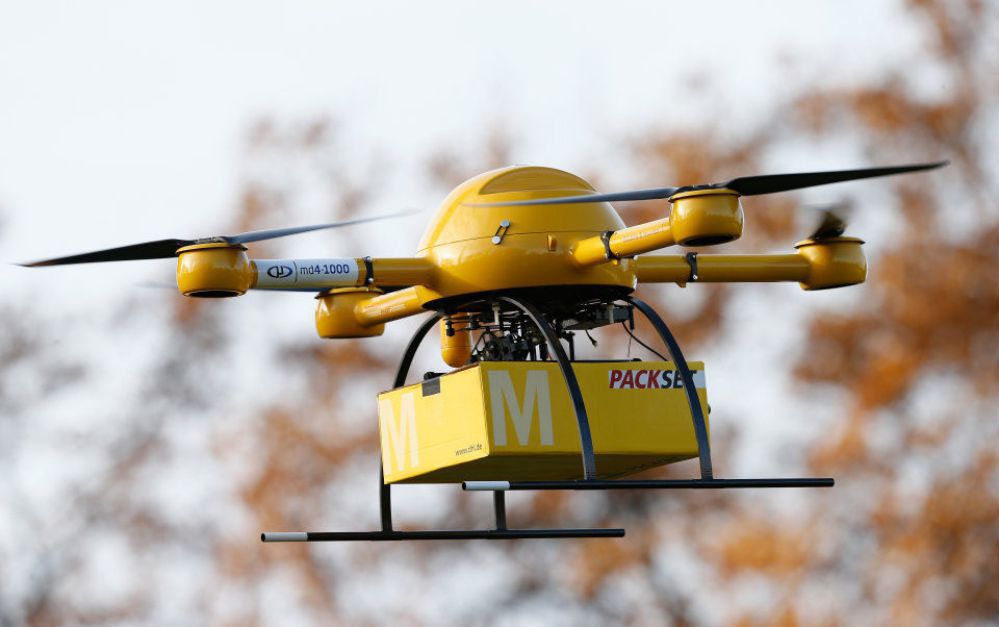
Drones

The practice of delivering small parcels would solve delay problems, such as traffic jams and lack of accessibility in poorly infrastructured regions.

Even with all this technology, the efficiency of the logistical process can be compromised by legal and infrastructure issues. Adapting drones to aviation system standards and maintaining air traffic monitoring will be a challenge.

For the optimization of distribution logistics to be achieved, investments must be made, and the training of skilled professionals must be a constant in companies for the proper handling of these new technologies.

Did you like the article? Then learn more about IT quality management and how to apply it in your company’s projects. Happy reading!

← Previous

5 steps to create an internal communication policy

Next →

How to Create a Corporate Communication Plan

In this article

Technologies for distribution logistics ERP (Enterprise Resource Planning) and inventory management Automated Guided Vehicles (AGVs) Automated Storage / Retrieval System (AS/RS) Artificial intelligence Transport management equipment Internet of Things (IoT) and mobile monitoring Drones

Follow us

Receive new articles

One monthly email with premium insights on IT and Industry 4.0. No spam.

Related Articles

Does Your Legacy System Still Work? That Might Be the Problem!
9 min · Gestão e Serviços de TI
Shop-Floor Productive Intelligence: How MES Digitalization Cuts Costs and Eliminates Invisible Bottlenecks in Manufacturing
11 min · Gestão e Serviços de TI
IT Observability: How to Anticipate Failures Before They Impact Business Operations
6 min · Gestão e Serviços de TI

Speak with a specialist

Get in touch with our consultants to answer your questions and identify the ideal solution for your business.

Talk to a specialist
Message sent successfully!

Legal Terms

  • Privacy Policy - LGPD
  • Cookies Policy

Contact

  • +55 (47) 3036-7800
  • contato@teclogica.com

Address

R. XV de Novembro N: 759,
Centro Blumenau - SC
ZIP: 89010-902 | Brazil

Follow us

Selo Empresa Associada ACATE 2026
Encontre-nos no Glassdoor
Selo Entra21 - 20 Anos

Teclógica Serviços em Informática Ltda. CNPJ: 00.089.877/0001-09 | D-U-N-S® 901313817

Utilizamos cookies para registrar em seu dispositivo dados que contribuem na sua identificação em visitas futuras, bem como na melhoria do desempenho e da utilização do site, conforme suas preferências de navegação. Para compreender melhor os tipos de cookies que utilizamos, sua possibilidade de configuração e desativação, bem como para conhecer a nossa Política de Privacidade e Proteção de Dados, clicando aqui.
Ao continuar utilizando nosso site, você concorda com a utilização dos cookies, assim como com a Política de Privacidade e Proteção de Dados e nossa Política de Cookies.
Configurações de CookieCiente
Manage consent

Privacy Overview

This website uses cookies to improve your experience while you navigate through the website. Out of these, the cookies that are categorized as necessary are stored on your browser as they are essential for the working of basic functionalities of the website. We also use third-party cookies that help us analyze and understand how you use this website. These cookies will be stored in your browser only with your consent. You also have the option to opt-out of these cookies. But opting out of some of these cookies may affect your browsing experience.
SAVE & ACCEPT
Powered by CookieYes Logo
Talk to a specialist