
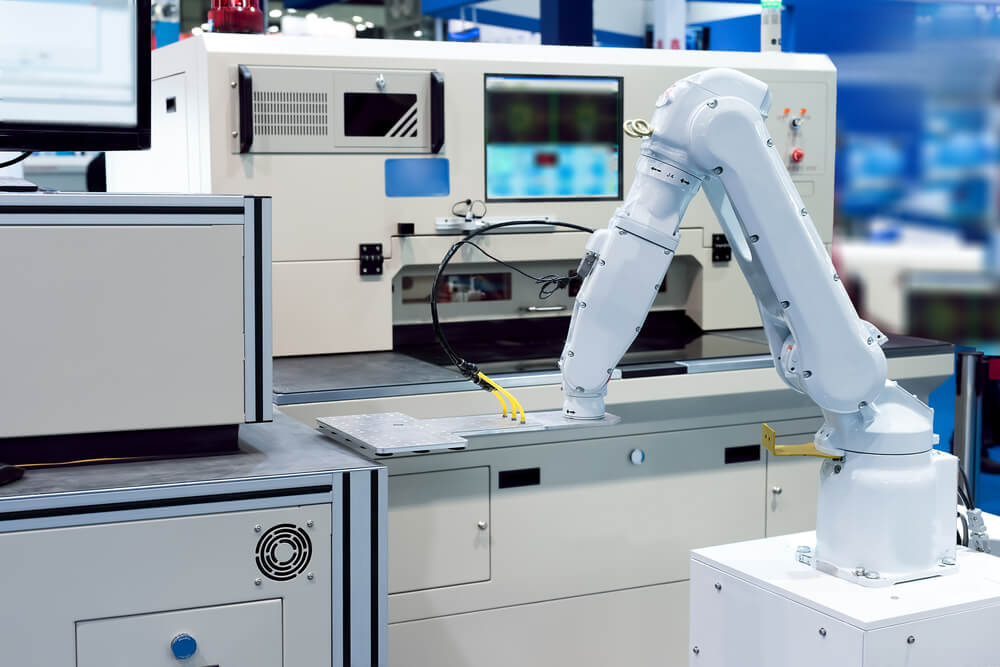
Given the scenario of digital transformation that various businesses are undergoing, it is notable how human-machine interaction plays a fundamental role. And throughout this process, machine-to-machine communication, or Machine to Machine (M2M), has also evolved.
Therefore, we prepared this post to explain the concept of M2M, describe its current applications, and show the main advantages it can bring to companies. Follow along!
What is the concept of Machine to Machine?
Machine to Machine basically consists of a machine communication standard, which typically aims to connect a device to a remote computer without the need for human intervention. This might sound like a definition similar to Internet of Things (IoT), but it is actually a subset of that field.
IoT has the function of connecting smart devices to each other and to the internet to store data, monitor or control the environment, support decision-making, among other purposes. On the other hand, M2M has a more specific role, often with machines communicating through their own protocols — which does not exclude the possibility of using a wireless internet access connection, for example.
Where is M2M being used?
Check out three examples of relevant Machine to Machine communication applications below.
Industrial production
Within the manufacturing sector, sensors on machines or other components send data directly to the company’s management system regarding maintenance or potential issues on the production line.
This allows machines to prevent interruptions and avoid greater losses by making decisions without human intervention in the face of unexpected events.
Logistics
In a logistics warehouse prepared with automation solutions that communicate with each other, the use of M2M helps alert when an item is out of stock or even trigger a replenishment order directly to the supplier.
Essential services
Utility service providers, such as water, electricity, and gas supply companies, can use smart readers to issue billing to customers and detect and resolve potential supply issues through M2M.
This reduces the costs of manual reading, in addition to streamlining the billing process.
What are its advantages?
Therefore, we conclude that the most evident benefits of Machine to Machine technology for companies are:
- Ability to remotely monitor equipment, systems, and other assets;
- Increased profitability, provided by more accurate decision-making;
- Reduced costs due to decreased downtime caused by unforeseen reasons.
We can say, therefore, that Machine to Machine communication is indeed a reality. However, its implementation involves detailed planning and technical factors that will be crucial for the proper functioning of equipment and systems integration. For this reason, rely on the support of a technology-specialized company and have greater peace of mind to take care of other responsibilities.
Did you like the article? Did you notice how M2M is more present in organizations than one might imagine? So how about receiving more content like this for free via email? Subscribe to our newsletter!

