
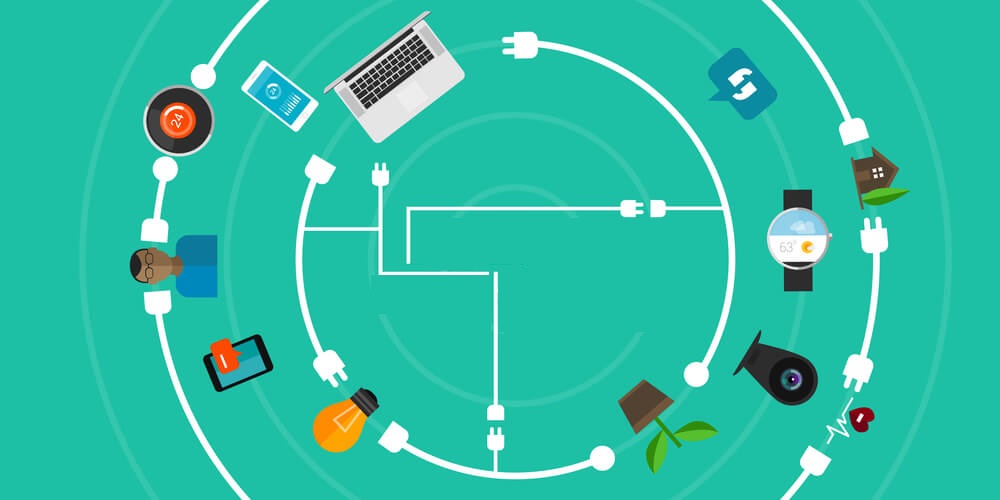
In a business scenario increasingly driven by the massive use of different technological solutions, it is difficult to imagine a company that does not have information technology resources at its disposal to operate with excellence.
Today, a large part of organizations are dependent on their IT infrastructures and, more than ever, need efficient ways to manage every available asset, ensuring that everything is perfectly aligned with business needs.
At this point, information technology architecture shows its full importance, as this is the concept that allows better utilization of every IT element in companies.
Want to know a little more about this subject? Then check out what we prepared for today’s post!
The strategic role of information technology architecture
Conceptually, IT architecture can be understood as the Information Technology area responsible for designing and implementing solutions based on its concepts, utilizing various systems, technologies, services, and products.
It is this concept that allows companies to extract the best possible benefit from their assets, through the correct organization and design of environments and facilities that can affect the performance of the entire infrastructure.
Currently, the strategic level of this activity has increased significantly, given that, with technological advancements, companies have become heavily dependent on their systems and hardware, which in turn have become indispensable for most processes.
This undoubtedly increases the demand for professionals — IT architects — with broad technical knowledge in different disciplines, who can identify and evaluate alternatives to reach the solution that best meets business needs.
For this, competencies such as mastery of systems design methodologies, modeling techniques, consulting skills, and project management are required, along with attributes like leadership, communication, teamwork, and negotiation capacity.
The importance of the IT architect
The IT architect is currently in high demand, as they are the crucial element to keep the entire IT infrastructure in line with the organization’s needs.
The IT architect plays a strategic role, serving as a pillar for benefits such as:
Performance improvement
By ensuring the good performance of systems, an IT architect ultimately indirectly enables an increase in employee productivity.
After all, with all resources operating properly and the availability of an architecture that keeps pace with the needs of the business and users, the ideal working environment is found.
Availability assurance
Just as detrimental as users suffering from slow resources and systems is being surprised by their unavailability.
This type of failure can leave the company unable to operate, causing losses to customers, the business image, and other internal and external areas.
Once again, the need for a well-structured IT architecture is reinforced.
Reinforces the idea of structure predictability, systems, and sector governance
This is a key point of IT architecture. More than just taking care of corporate systems and technologies, the IT architect is responsible for having a much broader vision of the business.
This is the professional who deals with innovation, the acquisition of new solutions, and is responsible for business evolution based on the predictability of available structures.
Thus, the IT architect must always strive to improve company resources, whether old ones — updating them and ensuring their compatibility with the current scenario — or new ones, keeping the organization always supplied with what is necessary. For this, they rely on the principles of IT governance.
Finally, as we have seen, it is currently no longer possible for a company to function properly, depending on its size and infrastructure, without a good information technology architecture. This concept manages to make the most of existing resources and also project the company’s needs for future acquisitions of new solutions, all to maintain its competitiveness.
Did you like the post? Have any questions or want to share your thoughts? Leave your comment! It will be a pleasure to interact with you.
