
Paying attention to distribution logistics, adapting equipment, and promoting a change in organizational culture are essential factors for companies to gain competitive advantages amidst all the advancement of digital transformation.
Customers are more demanding: they expect personalized shopping experiences or services, punctual deliveries, and socio-environmental responsibility from organizations.
At the same time, trends associated with these behavioral changes and the implementation of technological concepts such as the Internet of Things (IoT), RFID technology, Big Data Analytics, and Business Intelligence are emerging.
Amidst so many changes, companies need to initiate a process in which distribution logistics is optimized with the efficient use of information technology (IT). Check out what we selected to make your distribution logistics more effective:
Technologies for distribution logistics
ERP (Enterprise Resource Planning) and inventory management
The oversupply in the competitive environment in which we live makes it impossible for companies to predict the actual customer demand, even after the internet itself facilitated the creation of profiles that determine a purchasing behavior pattern.
To calculate minimum stock, control the entry and exit of inputs, perform warehousing and inventory movement processes based on LIFO (last in, first out) or FIFO (first in, first out), reduce costs, and handle other logistical processes, it is important to generate and monitor data and information. This data must enable Business Intelligence through the use of systems and tools adaptable to it, such as barcode and QR code readers, for example.
Automated Guided Vehicles (AGVs)
They enable the movement of inventory in distribution centers (DC) along predefined coordinate paths, without the assistance of an operator.
Automated Storage / Retrieval System (AS/RS)
A combination of equipment that moves stored items, such as the stacker crane, for example, which picks orders and sends them to shipping automatically.
Artificial intelligence
Robots that can perform high-risk operations, high volume, and repetitive processes.
Transport management equipment
To achieve efficient distribution logistics management, it is necessary to perform real-time delivery monitoring: from the use of RFID (Radio Frequency Identification) technology, which uses radio signals to transmit data without necessarily maintaining a visual field, to receipt by the customer upon electronic signature to the delivery person.
Internet of Things (IoT) and mobile monitoring
The IoT concept will be applied in machine-to-machine (M2M) processes connected to the internet, monitoring everything from raw material acquisition to delivering results to the customer.
It will be possible, for example, for an industry system to identify the limit inventory and automatically request a purchase requisition from the supplier’s software. The supplier, in turn, chooses the best carrier and requests cargo collection. Once loaded, the truck has a route determined by GPS, which points out accidents in real time and presents alternative routes to continue the journey.
This whole process is monitored by smartphones and other devices that process information and transmit it to the company’s system via Cloud Computing.
Drones
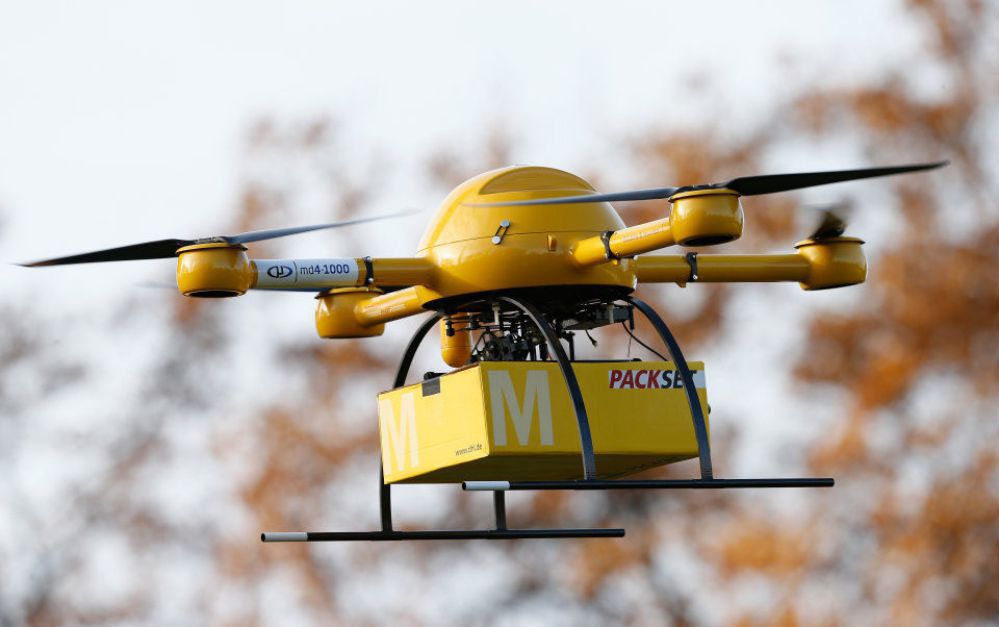
The practice of delivering small parcels would solve delay problems, such as traffic jams and lack of accessibility in poorly infrastructured regions.
Even with all this technology, the efficiency of the logistical process can be compromised by legal and infrastructure issues. Adapting drones to aviation system standards and maintaining air traffic monitoring will be a challenge.
For the optimization of distribution logistics to be achieved, investments must be made, and the training of skilled professionals must be a constant in companies for the proper handling of these new technologies.
Did you like the article? Then learn more about IT quality management and how to apply it in your company’s projects. Happy reading!
