
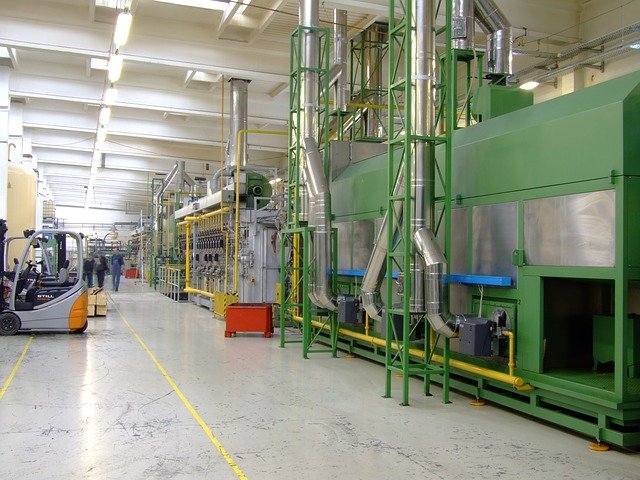
Industrial production management is an area focused on organizing manufacturing processes to extract maximum efficiency. Technological advancement has enabled the integration of various manufacturing flows to achieve this goal, as well as to obtain higher quality.
This activity is strategic in industry, as it connects administrative factors and material needs. This requirement is practically mandatory in the current scenario, as the alignment between operations and company objectives strengthens the business and boosts market competitiveness.
Thus, balance is necessary to increase productivity, reduce costs, and control processes in order to achieve the desired quality. Understand the responsibilities of the industrial production management area in our post and its importance in ensuring the execution of processes.
The functions of industrial production management
Planning
The planning within industrial production management is one of the starting points to optimize workflow and operations. To this end, it is important to perform the mapping of all industry processes, indicating inputs and outputs objectively.
To execute this stage, production steps are considered, arranged in flowcharts or other easily visualizable forms of the factory floor overview. Thus, the tools allow for the identification of potential flaws, redundant steps, and other problems.
Planning must be aligned with company objectives, both regarding quality and productivity.
- Identify the activities of the production process and the managers and technicians of each area;
- Classify and structure processes in order of importance, according to company objectives;
- Determine the starting point and results of each stage, as well as the level of detail of information related to the industrial process;
- Validate the mapping of suppliers, inputs, processes, and outputs;
- Analyze processes to identify flaws in the draft and evaluate result indicators;
- Consider unforeseen events such as lack of supplies, delays, shortages, among other problems for the progress of activities;
- Make modification proposals to optimize processes and minimize potential waste;
- Share the mapping with the entire team and receive contributions before finalizing it.
Execution and control
Monitoring task execution and performing process control are important activities within industrial production management. This is the area responsible for identifying process flaws, recognizing them, and finding mechanisms to correct them.
At this stage, it is important that employees are aligned regarding techniques and working methods to control the root causes of flaws. This is necessary to maintain product quality.
Furthermore, identifying production bottlenecks and solving them is essential to keep production constant and also avoid stoppages and waste. Using the process map and knowing industrial planning is fundamental to define action plans.
The employees involved in this range of tasks also need to monitor the inputs and outputs of resources and materials to adequately meet demands.
Monitoring
Production monitoring activity brings together three fundamental procedures to support the maintenance of machines and processes. They have the purpose of improving the quality of the final product:
- Permanent inspection at the source, that is, in processing and its standardization;
- Preventive actions to avoid abrupt interruptions, defects, and recurrence of problems on the production line;
- Continuous improvements of processes and products, through standardization and goals to be followed;
All of this matters so that the industry comes as close as possible to “zero defect”. Applying methodologies such as Six Sigma or Lean Manufacturing can help achieve this goal, as this is an important target to pursue.
The performance indicators (KPIs) are an essential part of making this evaluation. It is through them that managers understand resource usage and the need to correct any production stage.
Additionally, KPIs make strategic alternatives perceptible and offer support for better decision-making.
Responsibilities of a production manager
The production manager must be prepared to understand and manage each of the production stages. This is necessary because their position is strategic and determines production success.
To manage industrial production, they must:
- Choose the most suitable technologies;
- Choose suppliers, raw materials up to their shipment;
- Manage operations;
- Monitor production systems;
- Coordinate employees on the production line;
- Supervise all stages of the process;
- Organize maintenance whenever necessary.
All these dynamics allow the professional to find ways to improve the production line, process phases, and general structure. Thus, they become responsible for the quality of the products offered by the company.
Furthermore, since the manager knows the entire operational and strategic procedure, they can implement cost reduction and efficiency increase measures.
6 essential attitudes to optimize processes
1. Apply preventive and corrective actions
Problem prevention actions are often seen as costs. However, in reality, they help prevent more serious losses.
Preventive maintenance cycles are necessary to keep industrial activity running constantly. This occurs because they prevent sudden machine stoppages and production interruptions, which lead to delivery delays and customer dissatisfaction.
This also helps avoid waste of materials, time, and money.
2. Seek continuous improvement
Periodically, the system involving a company’s products and processes needs to be reassessed. This is justified not only because methods change to provide more efficiency, but also because technologies change for this same objective.
Thus, pursuing better performance and standard renewal is ideal. To do this, you can constantly use the PDCA method:
- Plan;
- Do;
- Check;
- Act.
3. Organize data
There is no doubt that information regarding the industrial process needs to be accessible to those involved in the process. Among the collected information, some examples can be listed such as:
- Production;
- Inventories;
- Finances;
- Deadlines;
- Indicators.
In addition to alignment among employees and company goals, this data can provide a foundation for changes and improvement of the production process.
This task can be facilitated through planning software and industrial management software.
4. Train the team
Promoting team training and qualification to execute tasks and operate machines properly is essential for productivity. The returns for business management are great, as it empowers your employees to make decisions quickly and correctly.
5. Strengthen production management
Through the decentralization of decision-making, the company’s daily routine becomes more dynamic. This is positive because each of your managers can focus on their strategic activities, and the company’s senior management can also stay busy with other objectives.
Furthermore, decentralization empowers managers from different sectors to grow and bring positive results such as leadership capacity.
6. Stay attentive to innovations
Technology sees continuous advances in productivity and efficiency. Therefore, it is imperative that professionals in the field stay attentive to market developments that can be applied to their line of business. This is because it is possible to ensure better results by implementing new tools in the production sector.
Technologies such as management software, like APS and MES, which favor data collection and process automation, can directly influence results by helping to integrate sectors and machines with each other, making communication easier and more efficient.
If you want to know more about the manufacturing solutions offered by Dassault Systèmes, subscribe to our newsletter!

