
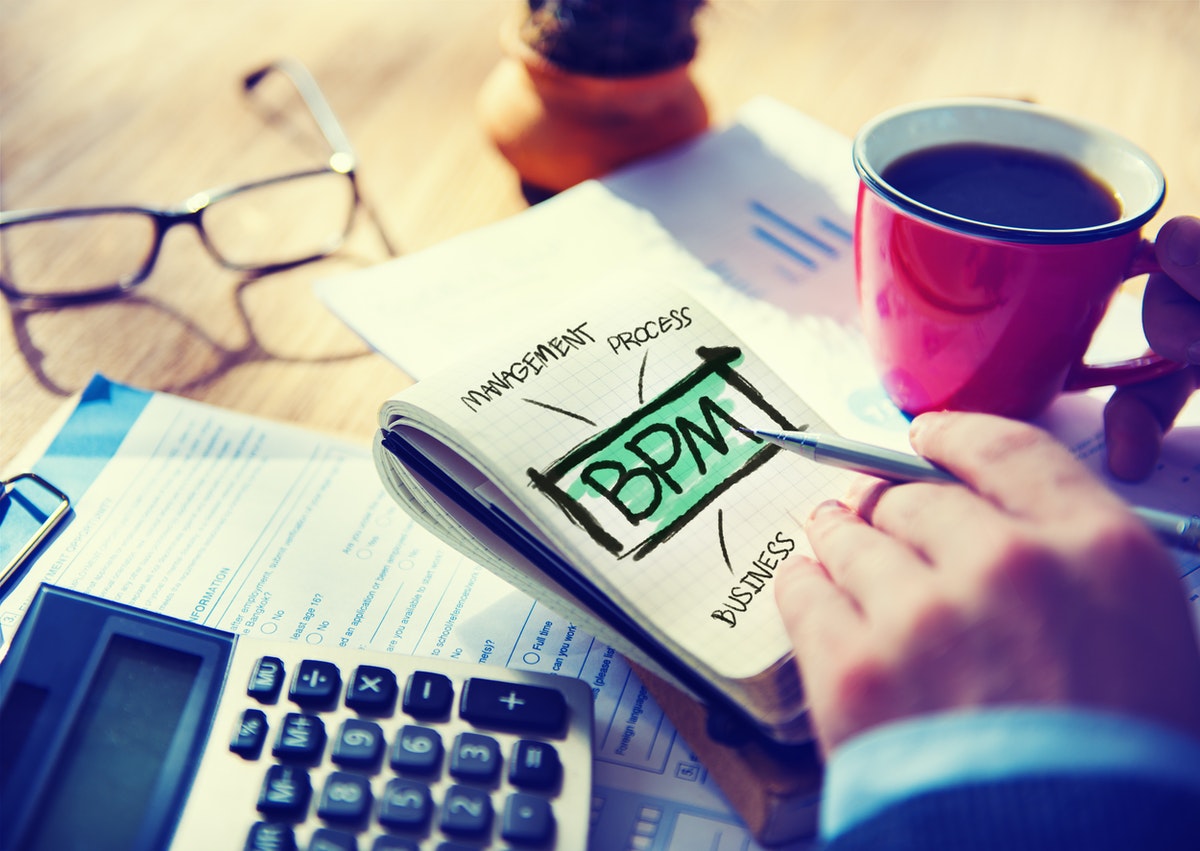
Given the high market competitiveness, every organization needs to know its processes well. With BPM, it is possible not only to understand them, but also to manage them efficiently.
What is BPM?
The acronym BPM stands for Business Process Management, which translates to Business Process Management.
It is a management approach focused on the continuous improvement of processes. Therefore, it is adaptable and facilitates the management of the organization and production as a whole.
Through a set of practices, BPM seeks to systematize complex organizational aspects, synchronizing business strategies with customer expectations and needs.
By doing so, it aims to identify potential management improvements, making information clear and objective.
The main reference in operational management, the Association of Business Process Management Professionals (ABPMP), understands the topic as a managerial discipline.
Therefore, it is not a methodology, technological tool, or even a business structure.
Being a discipline, it relies on a series of knowledge regarding the principles and practices of process management.
For this reason, BPM is considered a core business capability.
Why is BPM important?
With BPM, a business can continuously improve its processes, generating more efficiency, assertiveness, and adaptability.
It is a way to achieve business objectives through management, improvements, and a set of approaches to analyze, model, publish, optimize, and manage production.
To achieve this, it relies on a series of requirements such as human resources and documents, which promote its competitive differential.
Application Benefits
An organized company with good management that makes the most of its capabilities will achieve several benefits from BPM, such as:
Transparency
BPM will bring clarity to all business actions, providing efficient communication that improves organizational culture and better integrates teams.
Productivity
With BPM, the company will have a more qualified team, activity standardization, and best practices, avoiding rework and ensuring delivery quality.
Control
Management will have more control over indicators and, with the help of technologies, greater business vision.
Cost Reduction
With fewer reworks and bottlenecks in processes, production costs and time spent on activities are consequently reduced.
Value
All these points deliver value to the customer, as deliveries become increasingly qualified, ensuring overall satisfaction.
Differences between BPMN and BPMS
Since BPM is not a methodology, but a set of practices and principles regarding the management of an organization, there are other terms that may seem similar but are not the same, which is why it is important not to confuse them.
BPMN
This is a more modern acronym that establishes a set of symbols providing the notation for process modeling.
Each of them has its own behavioral rule and indicates a different reaction. They are: gateways, swimlanes, artifacts, activities, and events.
BPMS
This is the acronym for Business Process Management Systems.
In other words, it refers to the technologies that will improve production management through automation and process modeling capabilities.
Key points of BPM
To achieve the highly coveted perfect operation, BPM has several crucial points for gaining a complete view of the business. They are:
Mapping
The first step is to discover the processes and fundamental details involved in your activities.
After that, the focus is to document all this information in an organized, clear, and accessible manner for everyone.
Only with this knowledge is it possible to have deep insight into production costs and bottlenecks, resource usage, and function distribution.
This will give you a broader view so you can refine your management strategies and achieve the ideal production scenario.
Standardization
Once all your processes are properly mapped, it is time to standardize them, formalizing and organizing guidelines that will apply to everyone.
It is important to remember that a single, rigid model for everyone’s work is not ideal in BPM, which is why you must understand everyone’s expectations. Through standardization, all mapped tasks can gain continuity until it becomes clear that this standard needs to be readjusted.
Furthermore, it will be possible to mature strategies and prevent inconsistencies along the way, ensuring complete delivery.
Improvement
With this maturation, activities can be optimized since, once mapped and standardized, they follow an optimal flow.
Improvement will be achieved through organizational adjustments aimed at synchronizing the expectations of both the business and the customers. Thus, results will stem from analyzing potential improvements and structuring the workflow to guarantee the delivered value.
Therefore, it is necessary to identify processes, prioritize them, redesign them, prepare improvements, and implement them.
What aspects does BPM address in industry?
Given the insights of BPM to improve vision and management in organizations, here are the aspects it addresses in industry.
Strategies
To improve business vision, alignment with strategic planning is required.
The organization needs to look at strategies and act according to its action plan, whether improving or readjusting activities.
Objectives
Without a clear view of processes, objectives will certainly be uncertain as well.
An important part of value delivery is having concrete objectives. To achieve this, they must be defined and managed in the best possible way.
Culture
Keep in mind that changes impact culture, so it is important to identify them and implement best BPM practices.
Organizational Structure
If your structure is complex with a diversity of departments, seek to handle processes end-to-end.
To achieve good results, it is necessary to promote integration and collaboration across the entire organizational structure.
Roles
It is common for many people to participate in the same workflow. Therefore, roles must be well-defined to ensure the correct flow.
Policies
With BPM, guidelines, standards, and policies must be established to guide production, ensuring aligned safety and conduct.
Method
It is also necessary to define which methods will facilitate management and the best way to apply them, ensuring consistency.
Technologies
Finally, BPM is facilitated by the use of technologies that improve management, such as an MES system.
With it, you can bridge the gaps between production planning systems and your managers, optimizing infrastructure resources.
Want to access more content like this? Subscribe to our newsletter and follow materials on manufacturing.

