
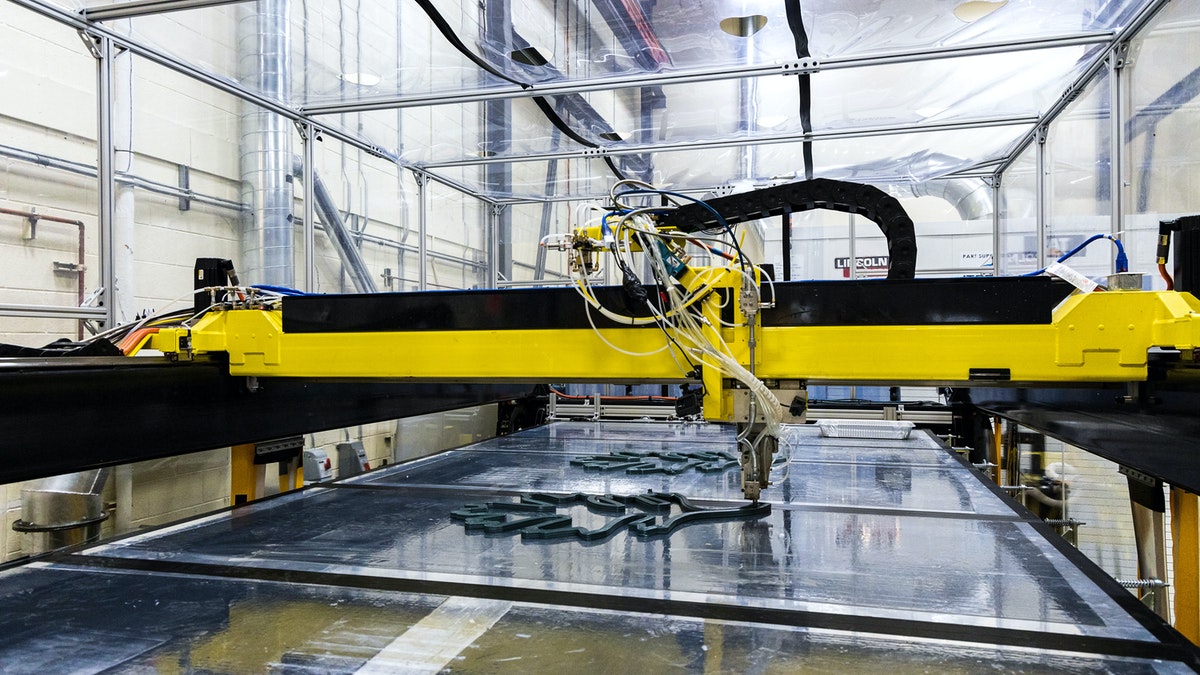
The whole world has been impacted by countless technologies that are here to stay. For example, 3D printing, also known as additive manufacturing, which is revolutionizing factory production. Several industries already have equipment capable of reducing production and distribution costs by up to 90%, as in some cases.
Since many people are still not familiar with the term additive manufacturing and its applications, we created this article to better explain the scenario. Follow along.
What is additive manufacturing?
Additive manufacturing involves a series of technologies capable of producing objects with complex geometry from digital models, layer by layer.
It may seem like something innovative and recent, but the technology emerged around 30 years ago, and its use has undergone countless changes to become what we know today.
Nowadays, 3D printing brings considerable results to various sectors of the economy, which see expressive gains from the use of this innovation.
In the market, there are basically three main types of additive manufacturing, with different characteristics in assembly and material usage. They are:
- Fused Deposition Modeling, which uses polymer filaments in object production;
- Stereolithography, a model that solidifies certain liquid resins using ultraviolet light;
- Selective Laser Sintering, which produces objects from granulated materials such as plastics, metals, and ceramics.
The technology is being applied in the manufacture of various equipment and products, empowering major innovations especially in industry.
What is the importance of additive manufacturing?
Currently, the world continues to adapt, to the point where we are now talking about the Fifth Industrial Revolution, also called Industry 5.0. This happens because new technologies are increasingly being created that enable more agile, less costly, and more environmentally conscious processes.
As a result, economic sectors have undergone numerous processes involving digital transformation, especially regarding manufacturing.
Thus, additive manufacturing is a safe bet as it provides a range of very significant improvements, involving:
- Waste reduction, in addition to reduced material usage also consuming low electrical energy;
- Product customization, which are produced according to specific needs;
- Cost reduction, lowering unit costs with production in adjustable quantities;
- Increased productivity, moving from digital to physical production through rapid prototyping;
- Error mitigation, as it is possible to correct flaws before finalizing production;
- Improvements in product quality.
Additive manufacturing doesn’t stop there
In the digital transformation scenario, innovation is a fundamental requirement for organizational competitiveness. Therefore, we have gathered here some trends in the additive manufacturing market, which in 2020 was projected to reach US$ 17.2 billion globally.
In addition to the points we highlighted earlier, additive manufacturing is expected to go beyond prototyping, being considered for mass customization.
Civil Construction
In this market, concrete 3D printing is currently valued at US$ 27.8 million, and according to some research, it is expected to rise to US$ 56.4 million in 2021.
This is because digital manufacturing has brought more than 3D architectural models to civil construction, with printers of this type being developed to create concrete structures.
Composite Polymers
Besides concrete, other materials such as metals have also seen considerable innovations, just like the already widely used polymers.
Various materials such as high-performance filaments like polypropylene are becoming increasingly popular. Following this pace, new materials and solutions are expected to reach the market and further innovate additive manufacturing processes.
Tools and Spare Parts
Far beyond objects with complex geometry, many companies already use additive manufacturing to manufacture spare parts for production lines.
Heineken, in fact, also produces specific tools for its production, observing a 70% to 90% reduction in costs and product delivery time.
What are the applications of additive manufacturing?
So far we have indicated some examples of additive manufacturing use that are generating various benefits.
These solutions have caused major impacts on the daily operations of industries as production becomes more scalable, agile, and profitable.
In Brazil, a 2020 World Economic Forum study revealed that 49% of organizations in Brazil intend to invest in additive manufacturing by 2022.
Among them, the most interested correspond to the aerospace, logistics and transport, chemical, and biotechnology sectors.
With the increase in this interest, some sectors already use and prove the advantages of the technology:
Aeronautical Industry
In this sector, metal parts for airplanes are already produced by 3D printers.
With the use of technology, these materials have become more resistant, lighter, and with much lower production costs.
Engineering
For the production engineering sector, 3D metal and polymer prints are already a reality, with the latter being the most available so far.
In mechanical engineering, many spare parts for production lines are being manufactured using 3D printers, including in Brazil.
Meanwhile, in manufacturing engineering, polymers continue to stand out with currently available filaments, thermoplastics, resins, fiberglass, and carbon fiber filler.
Automotive Sector
This is a sector that is constantly renewing itself, and with additive manufacturing, many high-quality parts are being produced from digital to physical.
In fact, some companies are managing to produce a complete vehicle structure quickly using 3D printers.
Healthcare
In healthcare, 3D printers have helped create low-cost and highly customized prosthetics, according to patient needs. Furthermore, this assistance even extends to surgical simulations, further increasing safety and success rates.
The expectation for the future is that it may even be possible to print epithelial cells and human organs, which could save many lives.
What to expect from the future?
The sectors we highlighted here are just a few of the countless examples that additive manufacturing has impacted.
This is because we are facing a revolutionary technology, highlighted even further by the coronavirus pandemic, which promises to increase the speed and quality of manufactured materials.
Whether in healthcare assistance, building and organizational infrastructure, or even as a sustainable alternative.
Did you enjoy the article? Take the opportunity to also watch our webinar on the role of technology in industrial strategies.

