
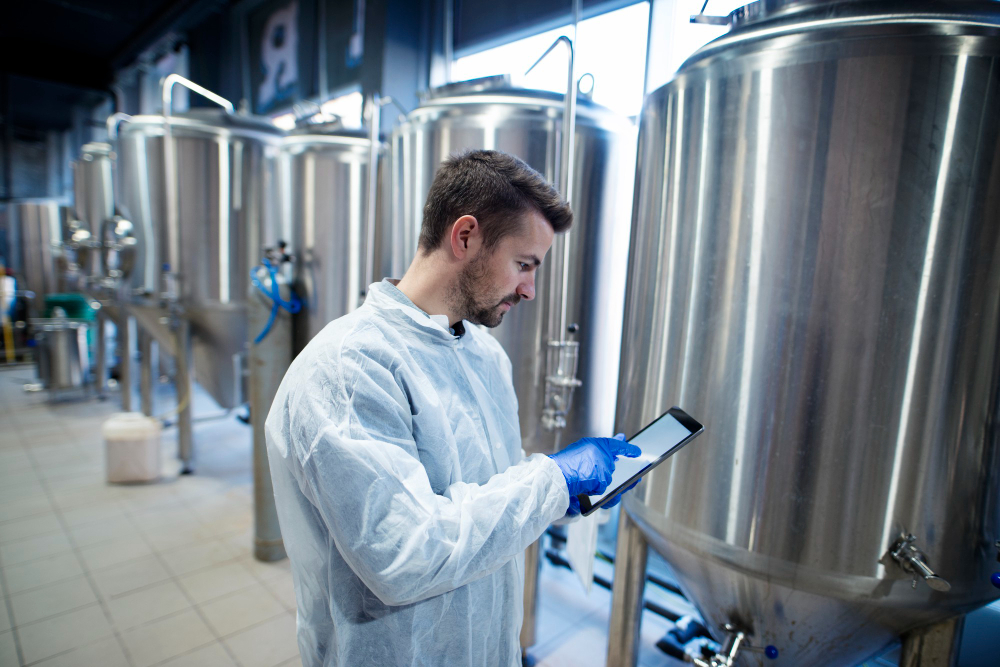
An evidence-based decision-making culture, widely known as being data-driven, has become an indispensable strategy for industrial executives to make assertive, fact-backed decisions.
While operational choices historically relied on subjective intuition, today’s technological reality enables plants to leverage concrete data, amplified by tools such as Artificial Intelligence (AI) and Machine Learning, to mature a data-driven culture across organizations.
This article explores the strategic importance of operational telemetry and how cultivating a data-driven culture yields substantial operational gains, examining real-world industrial applications such as glass container manufacturing.
What is a Data-Driven Culture and Why is it Essential?
Being data-driven describes the disciplined practice of collecting, contextualizing, and transforming raw data into actionable intelligence through systematic analysis. This data reflects ground-truth operations, guiding leadership with clarity. The discipline of data science, accelerated by machine learning algorithms, automates real-time anomaly detection, unlocking deeper and more timely operational insights.
Practical Example: Glass Bottle Manufacturing
In the glass bottle industry, adopting a data-driven framework powered by AI and Machine Learning radically transforms shop-floor outcomes. For instance, sensors positioned along the production line capture real-time furnace temperatures, gob weights, mold pressures, and conveyor speeds.
Machine learning models trained on historical operational datasets analyze these telemetry streams to forecast impending defects—such as glass wall stress, thermal fissures, or bottle breakage—well before they manifest in final inspection.
Armed with these predictive alerts, supervisors schedule preventive mold adjustments and recalibrate thermal zones dynamically, dramatically cutting scrap rates and maximizing production yield.
Key Benefits of a Data-Driven Manufacturing Enterprise
The benefits of institutionalizing a data-driven mindset ripple across every industrial tier:
1. Minimizing Unplanned Downtime
Unplanned machine downtime directly erodes production quotas and creates downstream bottlenecks. A data-driven methodology enables condition-based predictive maintenance, monitoring asset vibration, thermal trends, and electrical loads to intervene before catastrophic mechanical failures occur.
2. Fact-Based Decision Making
Data analytics replaces guesswork with validated metrics. Rather than accumulating disconnected data silos, data-driven manufacturers establish correlated dashboards that empower shift supervisors and executive leadership alike to act decisively.
3. Continuous Quality Optimization
Continuous quality inspection and statistical process control (SPC) align production batches with tight client tolerances, uncovering subtle drift factors that human inspection routinely misses.
4. Process Bottleneck Elimination
Mapping throughput against cycle times illuminates hidden bottlenecks, streamlining transitions between workstations and compressing overall manufacturing lead times.
5. Predictive Issue Remediation
Forecasting operational disruption is the premier capability of modern industrial data platforms. Algorithms identify subtle thermal or mechanical precursors to breakdowns, transforming maintenance from reactive triage into proactive governance.
The Role of Enterprise Architecture in Data-Driven Success
Technology is the core foundation of a successful data culture. Robust system integration ensures that telemetry generated by PLCs, sensors, and SCADA is centralized within the MES and synchronized with corporate ERPs. Furthermore, enterprise cybersecurity safeguards industrial IP and guarantees data integrity across the operational landscape.
In modern manufacturing, where the race for cost reduction and yield maximization is perpetual, data analytics provides the competitive foundation for agile, sustainable growth.
Did you find this content valuable? Discover more insights on industrial data intelligence on our blog.
Connect with us on social media for the latest technological developments!


