
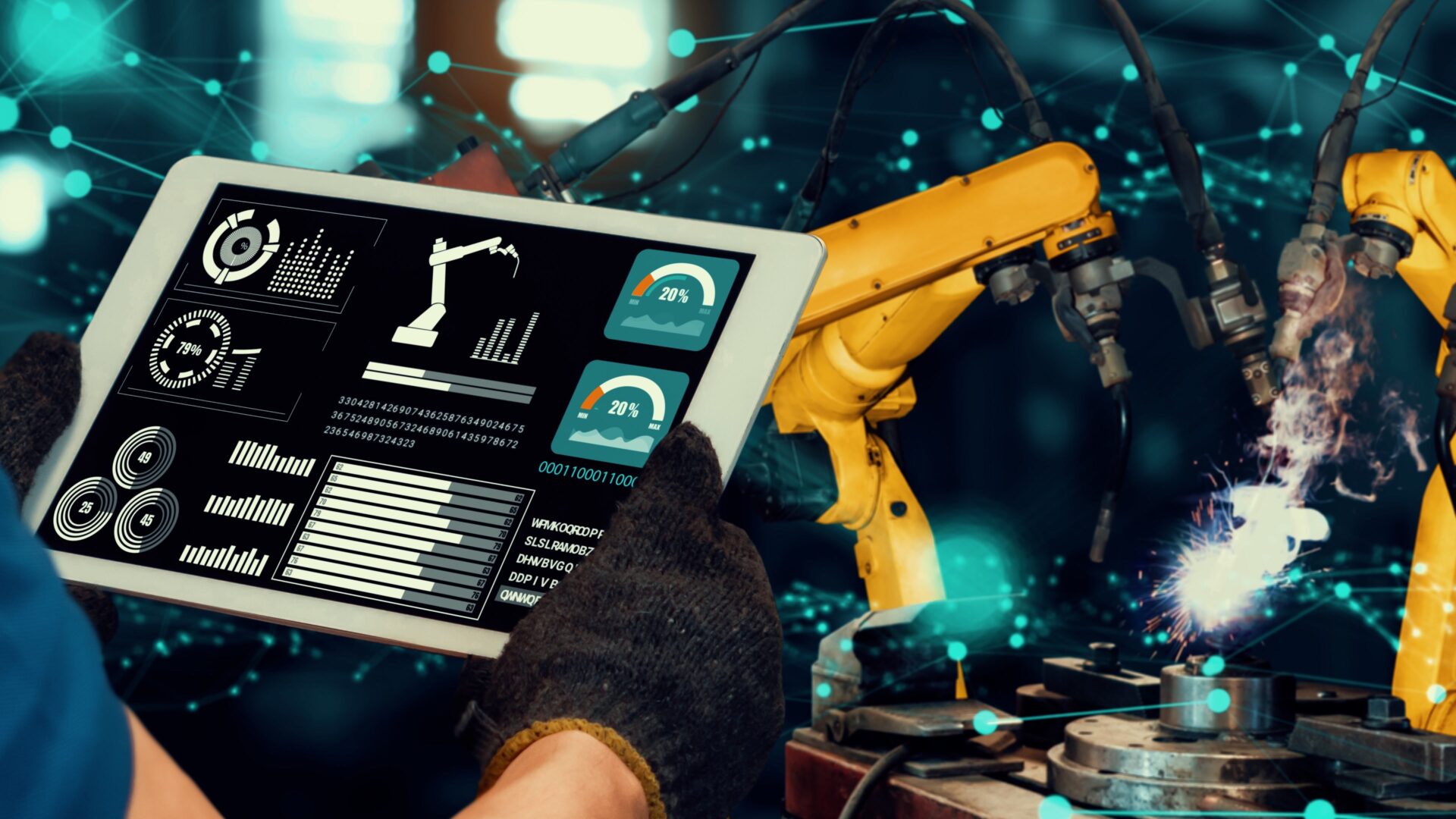
Industry 4.0 is no longer a distant trend and, therefore, has consolidated itself as a reality with no return. In this new scenario, Artificial Intelligence (AI) stands out as one of the most strategic technologies to accelerate the digital transformation of factories and supply chains. More than automating tasks, AI is revolutionizing the entire industrial journey — from planning to delivery — and, consequently, even impacting the way products are perceived by the end consumer.
AI in Industry: How is it transforming the sector?
But, in practice, how is AI shaping the daily lives of industries? After all, what gains does it deliver? What challenges arise? And what can we expect in the coming years?
Perhaps we should start this analysis by understanding the practical applications of AI in Industry and, thus, understanding how some forms of use can impact our daily lives on the production line.
Main applications of AI in Industry
1. Smart Manufacturing and Quality Control:
One of the biggest gains of AI is the ability to “see” what the human eye cannot see. Combined with computer vision, AI performs thorough inspections during the production process, identifying imperceptible flaws, such as microcracks, misalignments or paint flaws. In the automotive industry, for example, this technology is applied on the assembly line to ensure that each part meets rigorous safety and quality standards.
2. Predictive Maintenance and Downtime Reduction:
Sensors attached to machines capture data such as vibration, temperature and energy consumption in real time. AI analyzes this information and, therefore, anticipates possible failures, indicating the ideal time for maintenance. This prevents equipment from breaking down in the middle of production, drastically reducing machine downtime and emergency repair costs.
3. Logistics Optimization and Demand Forecasting:
With machine learning algorithms, AI analyzes market data, consumer behavior, sales histories and even weather conditions. The result? More assertive forecasts about future demand, optimizing production planning and, consequently, reducing unnecessary stocks.
4. Robot Programming and Operation:
AI also simplifies the programming of industrial robots. One example is the partnership between Siemens and Schaeffler, where AI automates the programming of robotic cells, accelerating the setup of production lines and increasing flexibility in the face of new products.
5. Digital Twins and Simulations:
So-called “digital twins” create a virtual replica of the factory or equipment. AI tests scenarios, identifies bottlenecks, and simulates process changes before applying them in the real world — all with real-time data.
The Automotive Industry and the use of AI
With the 5 items described above, we can now evaluate at least one real case, in which the automotive industry, due to several factors, has been one of the most impacted by all these changes.
According to an article from jornal O Globo, the automotive industry is expected to triple the number of connected cars by 2030. This means vehicles that communicate with factories, dealers and users, receiving software updates, sending maintenance alerts and offering personalized services.
In addition to this focus on the automotive industry, Siemens has also been active and present in this scenario and, certainly, can be identified as one of the pioneers in incorporating AI into its industrial processes, aiming to increase production efficiency and quality. A notable example is the partnership with Schaeffler, where implemented an AI solution for programming robotic cells. This solution automates the creation of complex codes required for manufacturing processes, reducing operational costs while increasing production flexibility.
The “Siemens Industrial Copilot”, developed in partnership with Microsoft, uses generative AI to assist operators in programming and operating industrial machines, making the process simpler and reducing setup time.
Benefits of AI in industry
From these examples mentioned, we can recognize some of the benefits of adopting AI in Industry:
- Increased Efficiency and Productivity
- Reduced Operating and Maintenance Costs
- Product Quality Improvement
- Predictability in Operations
- Data Driven Decision Making
- Greater Flexibility to Produce in Smaller, Customized Batches
With this, companies gain agility to adapt to market demands and product customization — especially in segments such as automotive, food and pharmaceuticals.
Challenges in implementing AI in industry
And, with all this scenario, what are the already recognized challenges of implementing AI? Among the main ones, we can see:
- High Initial Investment: Sensors, servers, AI platforms and team training require capital.
- Cultural Resistance: Many companies still see AI as a risk to the workforce, when in fact it complements and qualifies professionals.
- Data Quality: AI only learns if it has relevant, well-structured and good quality data.
- Technical Complexity: The implementation of AI requires integration between old (legacy) systems and new technologies, which is not always simple.
The future of AI in industry
With everything presented so far, the future prospects for AI in Industry are not only promising and challenging, but they are undeniable and inevitable. Furthermore, the advancement of Generative AI opens new horizons for this industry. With it, machines will be able to not only perform tasks, but create solutions, propose process improvements and even suggest new product designs.
In addition, the trend is for AI to be increasingly democratized, with solutions that are more accessible and integrated with software already used in industry.
Predictive maintenance will be enhanced by AI, anticipating failures with even more precision. Likewise, Digital Twins will become more intelligent and capable of testing complex scenarios in seconds.
Another point is the increase in mass customization, where each product can be customized without making the process more expensive — something that will only be possible with the massive use of AI.
The path leading to Industry 4.0 and the use of Artificial Intelligence does not need to be challenging. Therefore, having a specialized partner makes all the difference.
Teclógica works by supporting companies in the adoption of digital and intelligent technologies, offering:
- Digital Transformation Consulting
- Development of Tailored Solutions
- Industrial Automation and AI Application
- Support and Management of Technology Projects
If you are looking to increase your competitiveness, reduce waste and, at the same time, prepare your company for the future of the industry, learn more about how Teclógica can help: www.teclogica.com.br
Artificial Intelligence is no longer a differentiator — it is a necessity for anyone who wants to remain relevant in modern industry. It transforms the way we produce, make decisions and serve the market.
The challenges exist, but the gains are even greater. The future of the industry will be smart, connected and increasingly autonomous. And the time to start is now.
