
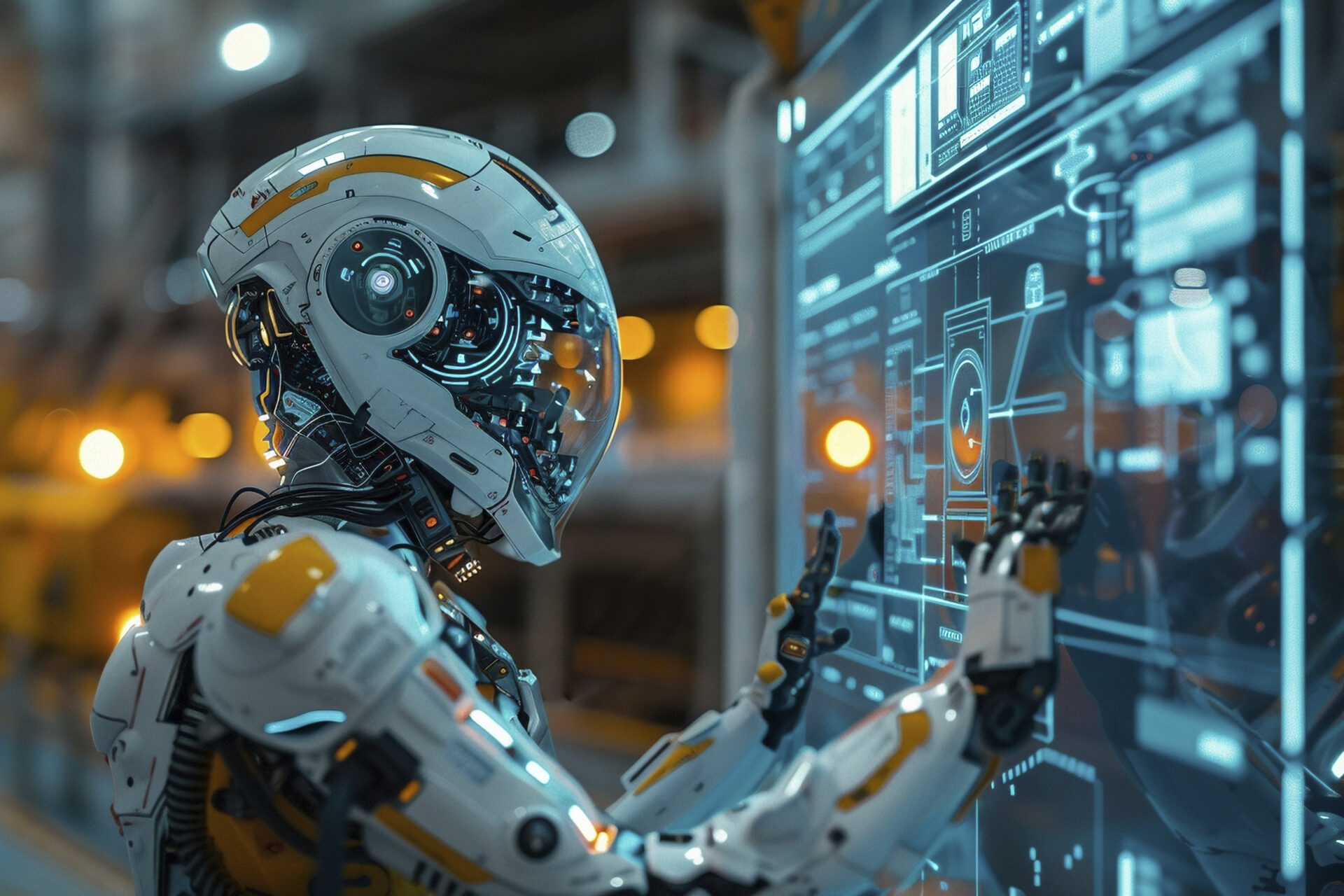
Did you know that Artificial Intelligence has already prevented critical failures, saved millions and transformed industrial operations whole? And that you probably didn’t notice? AI is not in the future — it is already in the present, operating in factories, distribution centers and plants around the world.
In light of this, we present five real stories where AI made a difference. See below:
1. When the Line Stopped Before It Stopped — BMW and Predictive Maintenance
At the BMW plant in Regensburg, predictive maintenance is not just a theoretical concept — but a practice consolidated. Sensors strategically positioned on vehicle conveyors send real-time data to an AI platform that monitors energy consumption, movement frequency and barcode scanning. Every second, the system analyzes operating patterns and identifies any deviations that could indicate an imminent problem. For example, an increase in energy consumption can signal an engine that is overloaded or has even worn parts.
In addition, AI not only detects the irregularity, but also classifies the severity of the problem, estimating the probability of failure within a certain period. This means maintenance teams are alerted in advance and can schedule repairs before an unexpected downtime occurs. This avoids delays on the assembly line and minimizes costs with emergency parts.
Benefits:
- Prevention of critical failures on the assembly line.
- Reduction of unexpected stops, ensuring production continuity.
- Increased operational efficiency with strict control over assets.
It is worth highlighting that, in this same article, other examples of companies that are also adopting AI solutions to similar problems are discussed.
2. The Fastest Route — Instacart and Smart Logistics
Instacart, a grocery delivery platform, has improved its logistics with an AI system that monitors inventory in real time, detects stockouts and proposes routes optimized for delivery people. With the “Store View” functionality, the system can predict stock levels based on sales history, seasonal events and even weather conditions. When this happens, and an item is out of stock, the AI immediately offers similar product alternatives or guides the shopper to a nearby store where the item is available. In this article we can see in more detail how AI has offered a new way to deal with logistics.
In addition, “Caper Carts”, smart carts equipped with sensors, not only count products in real time, but also suggest substitutions based on customer preferences, increasing satisfaction and reducing decision time. This system integrates AI, computer vision and predictive analytics to create a highly efficient logistics ecosystem.
Benefits:
- Drastic reduction in unwanted substitutions, avoiding customer frustration.
- Improved inventory accuracy by ensuring the right products are available.
- Increased customer satisfaction through personalized recommendations and faster deliveries.
3. The Human Eye Didn’t See — But AI Saw Everything
In a company that manufactures radios for first aid teams, product quality is a paramount issue. The traditional inspection system, staffed by human inspectors, was effective—up to a point. However, subtle defects, such as accidental switching of buttons or slightly misaligned labels, went unnoticed. That’s where AI came into play.
With high-resolution cameras connected to an AI platform, the system not only identifies but also categorizes defects based on their impact on the device’s functionality. For example, a misplaced button could compromise operation in an emergency situation, while a missing label could cause confusion about the correct frequency of operation. AI issues an instant alert, enabling corrections before products are packaged and shipped.
Benefits:
- Defect detection with greater than 99% accuracy, including defects that the human eye would not detect.
- Significant reduction of failures in the field, increasing the safety of radio operators.
- Improvement in the quality of the final product, reinforcing trust in the brand.
4. Inventory Under Control — Walmart and Intelligent Inventory Management
Walmart, the retail giant, was facing a classic problem: out-of-stock products and excess stranded items. To solve this, the company adopted an AI system that analyzes sales data in real time, crossing it with information from suppliers, commemorative dates and even regional trends. The system is able to predict demand for each item weeks in advance, allowing stores to place accurate orders and adjust their marketing strategies. In this article, we have a detailed look at the inventory system that Walmart adopted with this AI system.
In addition, AI monitors the life cycle of perishable products, identifying items close to their expiration date and suggesting promotions to reduce waste. In logistical terms, the system also optimizes the allocation of products between distribution centers, reducing transportation and storage costs.
Benefits:
- Improvement in product availability, minimizing customer frustration.
- Reducing food waste and optimizing the life cycle of perishable products.
- Supply chain optimization, resulting in lower operational costs.
5. Smart Energy — AES and the Optimization of Renewable Resources
AAES, one of the world’s largest renewable energy operators, uses AI to manage its wind and hydro farm assets. The AI system monitors the operation of the turbines in real time, analyzing factors such as wind speed, component vibration and temperature. From this data, AI is able to predict failures with up to 90% accuracy, allowing teams to schedule preventive maintenance without interrupting energy generation.
A Engie, a Duke, as well as other companies that also address their demands with AI, we can find in this article.
In addition, AI is also used to optimize energy distribution, redirecting the load according to the demand in each region. In a pilot project, AES was able to reduce power outages by 10% and save US$1 million annually in maintenance costs.
Benefits:
- Significant savings in operational costs, especially in remote areas.
- Reduced operational failures and increased equipment life.
- Improvement in energy efficiency, contributing to the company’s sustainability.
AI Doesn’t Wait — And Neither Should You
These cases demonstrate that Artificial Intelligence is not just a trend, but a reality that is transforming the industry. Therefore, companies that adopt AI are achieving levels of efficiency, quality and innovation that previously seemed unattainable.
If you’re still waiting to get started, remember: AI doesn’t wait. And whoever starts now, comes out ahead.
Is your industry also considering AI solutions? Teclógica can help you.
Did you like this content? So take the opportunity to follow our updates, tips and insights on our blog.
Follow us on social media and stay up to date with the latest news!


