
The way of producing has been constantly changing throughout history. And one of today’s trends when talking about this subject is digital manufacturing.
With the advent of Industry 4.0, there have been profound changes in the way different items are produced, making the evolution from digital to advanced manufacturing a reality. This change is continuous and, so far, the main advances are the ones we will see in the following topics.
The evolution of digital manufacturing
Digital manufacturing
Digital manufacturing helps to better visualize the production stages of a given item, the costs involved, and the effort required to scale this production. It is, therefore, a process that, with the aid of technology, optimizes spent time and reduces costs.
Advanced manufacturing
Discussions about advanced manufacturing are still very recent compared to older technologies. To give you an idea, this topic began to gain traction in 2010, in the United States and Germany.
The term generally appears associated with Industry 4.0 and the Internet of Things. The production process in this model involves autonomous equipment that uses data analysis and cloud computing to adapt production to the company’s needs in real time.
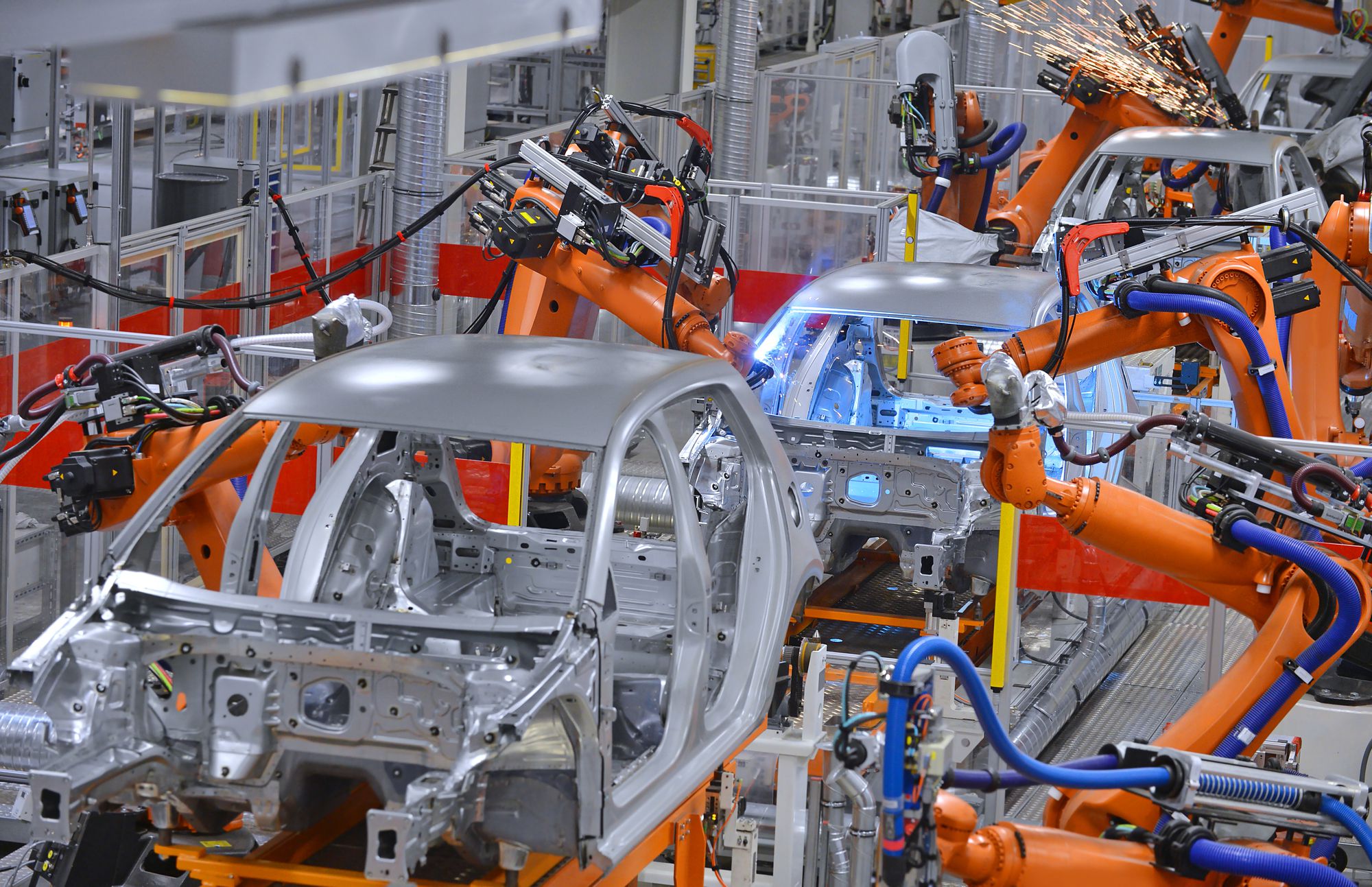
Imagine an automotive production line where vehicles are made from virtual models. The machines that manufacture them have the autonomy to decide how many units to produce based on historical demand data and received orders.
Thus, advanced manufacturing works with the fusion of the real and virtual (digital) worlds, in order to give more predictability and flexibility to processes.
Putting this concept into practice
Putting this concept into practice depends, first of all, on each organization’s evaluation of the possible ways to carry out implementation, the necessary resources (qualified people, infrastructure, and software), and the cost-benefit brought by this measure. Counting on specialized assistance helps to define these points.
The evolution of goods and services production processes is a topic widely debated by global entities. The main concerns are related to the labor market and the use of natural resources.
A 2015 study by the Organisation for Economic Co-operation and Development (OECD) — a multilateral body that includes representatives from the world’s largest economies — talks about transformations over the next 10 to 15 years that will bring new cutting-edge technologies, such as nanotechnology and biotechnology.
Manufacturing in Brazil
In some sectors of the economy, Brazil is a hub for innovation and already promotes discussions from this perspective. There are companies and universities, for example, with physical facilities adapted to develop this type of project.
In the public sphere, the Brazilian government launched, in March 2018, a program that allocates more than R$10 billion in incentives for Industry 4.0 in the country.
However, a large part of national production is quite delayed. Concerns are still related to issues such as the lack of qualification of human labor, low productivity, and misuse of available resources.
In general, there is plenty of room for technology to promote improvements at all stages of the manufacturing process. The big promises are cost reduction, process agility, and greater intelligence in production. All this as data analysis is implemented for a more integrated view of these processes.
And you, can you visualize the impact of digital manufacturing on your business and daily life? Share this article on social media and see what people are thinking about the subject.

