
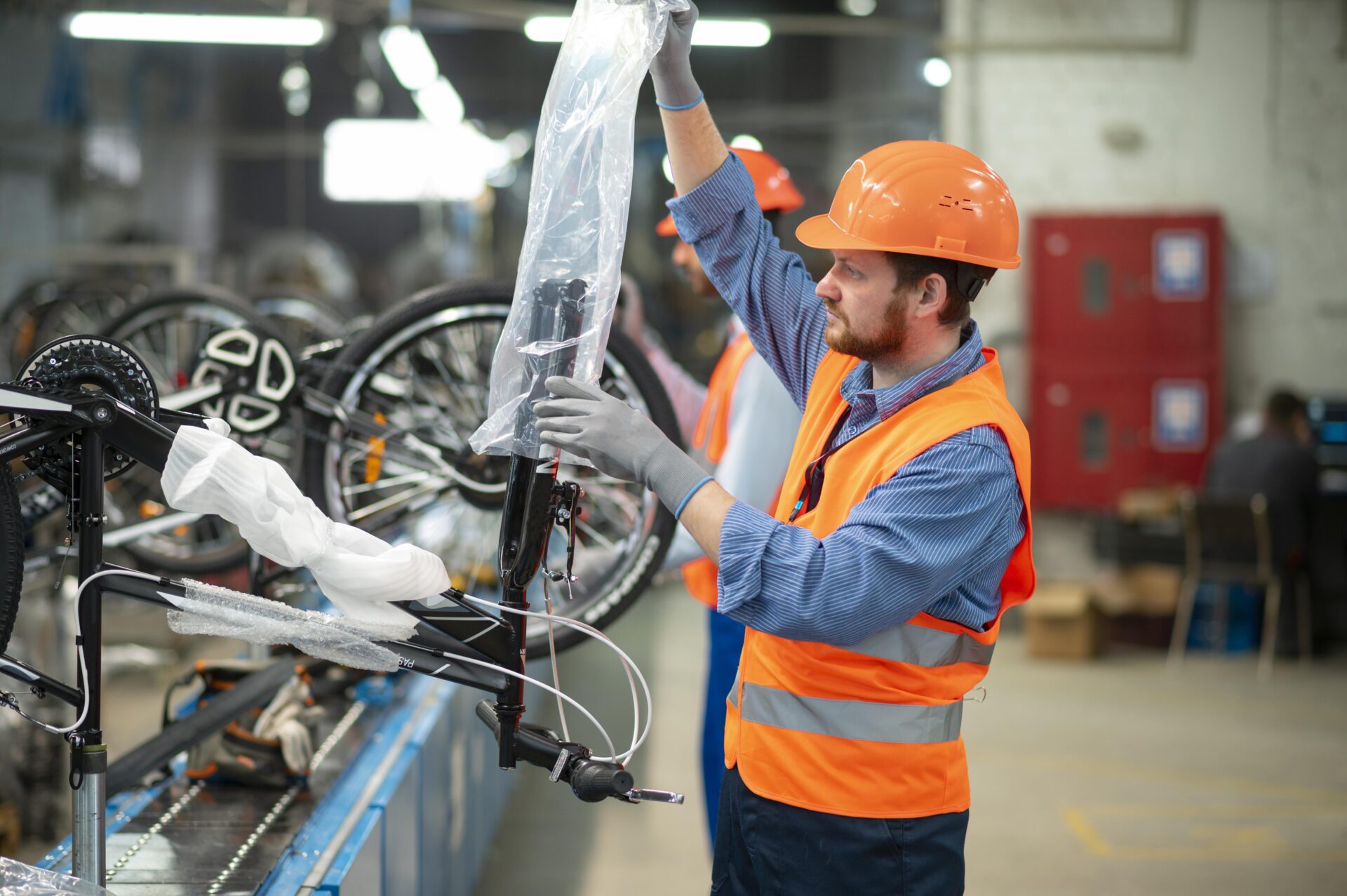
A plant layout directly governs all operational activities across a manufacturing facility, influencing everything from personnel movement to raw material transit and finished goods logistics. A poorly planned layout inevitably creates bottlenecks, increases handling costs, and introduces occupational safety hazards. Conversely, a well-structured layout maximizes productivity, optimizes physical space, and reinforces plant safety.
Furthermore, digital technology has become a vital ally in industrial planning, enabling leadership to simulate diverse operating configurations before physical implementation. In this article, we examine four crucial pillars of manufacturing layout design and how selecting the right configuration transforms factory performance.
What is a Manufacturing Plant Layout?
A plant layout, or physical arrangement, refers to the spatial organization of equipment, machinery, work cells, material staging areas, and transit routes across the shop floor. Its primary mission is ensuring peak operational efficiency by facilitating orderly process sequences and swift, safe material flow. In many industrial environments, an unoptimized layout causes significant losses in cycle time, energy, and labor productivity.
Studies demonstrate that restructuring a plant layout can deliver substantial productivity gains without requiring massive capital expenditure in new machinery. Often, reorganizing existing assets and work zones suffices to eliminate non-value-added travel and reduce operational costs.
When architecting a layout, engineers must prioritize manufacturing sequence, reducing transit distance for work-in-progress (WIP) and maximizing square-footage utilization, directly lowering per-unit production costs.
4 Main Types of Plant Layouts
Selecting the optimal layout depends upon product variety, production volume, material handling constraints, and equipment footprint. The four core archetypes are:
-
1. Fixed-Position Layout (Project Layout)
In this configuration, the product remains stationary while machinery, tools, and labor converge upon it. This setup is indispensable for large-scale, heavy manufacturing such as shipbuilding, aerospace, and large turbines, where moving the product is physically impossible or cost-prohibitive. Key advantages include flexibility, though scheduling and spatial constraints present significant coordination challenges.
-
2. Functional Layout (Process Layout)
Characterized by grouping equipment and skilled operators by specialized operational categories (e.g., all lathes grouped together, all stamping presses together). Widely deployed in batch manufacturing, this arrangement provides high flexibility to produce heterogeneous product mixes, though it requires meticulous scheduling to minimize queue times.
-
3. Linear Layout (Product or Line Layout)
Designed for high-volume, standardized production, a linear layout arranges machines sequentially in an unbroken production line. It achieves maximum throughput and minimal work-in-progress handling in automated operations, though it is rigid and susceptible to line-wide disruptions if a single station halts.
-
4. Cellular Layout (Hybrid Layout)
Synthesizing the strengths of functional and linear layouts, cellular manufacturing organizes dissimilar machines into dedicated cells tasked with processing complete product families. This setup balances high throughput with operational flexibility, optimizing footprint and shortening lead times while requiring cross-trained operators.
Critical Safety and Operational Factors in Layout Design
When engineering a factory layout, strict compliance with occupational safety regulations and ergonomic standards is paramount. For example, standards such as Regulatory Standard NR-12 mandate safety requirements for machinery and work environments. Key dimensions requiring rigorous attention include:
1. Personnel Circulation Routes
Pedestrian walkways must be clearly demarcated, unobstructed, and separated from forklift or automated guided vehicle (AGV) traffic. Clear passage minimizes collision hazards and ensures fluid operator transit.
2. Material Staging and Storage Zones
Raw materials, WIP staging, and tooling must reside in designated, labeled locations. Organized staging avoids clutter, reduces search times, and eliminates trip hazards.
3. Inter-Machine Clearances and Maintenance Access
Spacings between machine envelopes must allow operators to perform tasks safely and allow maintenance squads to execute inspections, repairs, and sanitization without spatial friction.
4. Overhead Material Handling
Overhead cranes and hoists must operate strictly along dedicated corridors devoid of permanent workstations beneath, eliminating crush risks and transit interference.
Safety as a Core Value
Workplace safety must serve as the primary design criterion in any industrial engineering project. Beyond safeguarding worker health, an orderly, safe workspace elevates team morale and operating efficiency. Electrical installations, machine interlocks, and emergency shutoff accesses must be planned meticulously.
Simulation Technology: The Modern Layout Design Advantage
With advanced industrial simulation software and manufacturing management systems, plant engineers can model 3D digital twins of production layouts, test material flows, and uncover bottlenecks before pouring concrete or shifting heavy machinery.
Simulating multi-scenario operational workloads ensures that the finalized layout fulfills both throughput targets and corporate return-on-investment criteria.
Ultimately, a well-engineered plant layout is a foundational competitive asset. It harmonizes ergonomics, material flow, and machinery utilization, ensuring a safer and significantly more profitable manufacturing operation.
Did you find this article insightful? Explore our continuous coverage of manufacturing technology and operational strategy on our blog.
Connect with Teclógica across our social channels to explore the forefront of Industry 4.0!


